 Anacortes Roofing
 Why Decks in Old Town Anacortes Wear Differently
Old Town Anacortes sits close to the water, and that proximity shapes everything about how a deck ages here. Salt-laden air off the surrounding marine waters accelerates corrosion on anything metal — fasteners, joist hangers, post bases, railing hardware. Add in driving rain that comes sideways off the Salish Sea during winter storms, plus a long, damp moss season under the mature tree canopy common to this older part of town, and you have a climate that's genuinely tougher on a deck than most inland Skagit County properties see. We work on decks across Anacortes, but Old Town's combination of age, tree cover, and salt exposure means the repair issues we find here follow patterns that are worth understanding before you decide what your deck actually needs.
Many of the homes in this neighborhood are older, which means many of the decks attached to them were built to a different code, with different hardware standards, and sometimes with different framing practices than what's required today. That's not a criticism of the original builders — it's just a fact that changes what a proper repair looks like now.
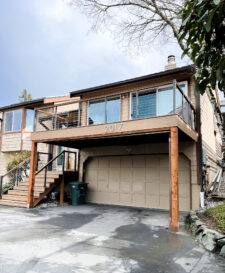
Signs Your Deck Needs Attention
Not every deck problem means a full rebuild, but ignoring the wrong signs can turn a modest repair into a structural one. Here's what we look for, and what it usually means.
Cosmetic Wear vs. Structural Concerns
A few cupped or graying boards, surface moss, or loose railing balusters are usually cosmetic and repairable without touching the frame underneath. Soft or spongy decking, a ledger board pulling away from the house, rusted-through joist hangers, or a deck that visibly sways when you walk across it are structural — and those need to be addressed before the deck sees regular use again.
- Boards that flex, feel soft, or show dark staining along their edges — usually early rot
- Rust streaks running down from fasteners or hardware onto the decking below
- Gaps opening up between the house and the deck's ledger board
- Guardrail posts that wiggle at the base, especially where they meet the deck framing
- Stair stringers that feel bouncy or show splitting near the fastener points
- Persistent green or black moss growth that doesn't dry out between rains
The Hidden Damage Salt Air and Moss Cause
The problems you can see are often the smaller half of the story. The bigger issue is what's happening underneath and inside the structure.
Hardware Corrosion
Joist hangers, ledger bolts, and structural screws are usually galvanized steel, and galvanizing is a coating, not a permanent shield. In a marine-air environment like Old Town Anacortes, that coating breaks down faster than it would ten or twenty miles inland. Once rust reaches bare metal, the hardware's load-bearing strength drops — and because it's often hidden under the decking or behind a rim joist, it can be failing for years before anyone notices.
Moss and Trapped Moisture
Moss doesn't just make a deck slippery. It holds moisture against the wood surface long after the rest of the yard has dried out, which is exactly the condition wood rot needs to take hold. On decks with heavy tree cover — common on older, established Old Town lots — north-facing sections or areas shaded most of the day can stay damp for weeks at a stretch during our wetter months.
Ledger Board Attachment
The ledger board — where the deck bolts to the house — is the single most important structural connection on most decks, and it's also the most common point of failure on older decks. Flashing details that were acceptable decades ago often don't keep water out as well as current methods do, and once water gets behind that ledger, rot can spread into the house's rim joist, which is a bigger and more expensive problem than the deck itself.
What a Correct Deck Repair Actually Involves
A repair that only replaces what's visible from the top often leaves the real problem in place. Here's what we check and address on every deck repair.
Framing and Structure
We inspect joists, beams, and the ledger connection for rot and hardware corrosion — not just the boards you walk on. Any compromised framing gets sistered, reinforced, or replaced before new decking goes down. Flashing at the ledger gets brought up to current standards so water is directed away from the house, not trapped behind it.
Decking and Fasteners
Individual board replacement only makes sense once we've confirmed the framing underneath is sound. We use stainless steel or high-grade coated fasteners rated for coastal exposure, since standard hardware is exactly what causes the early rust failures we see on older repairs.
Guardrails and Stairs
Loose or rotted guardrail posts are a safety issue, not just a cosmetic one — post connections need to meet current load requirements regardless of when the deck was originally built. Stair stringers get the same structural scrutiny as the deck frame, since they take concentrated point loads and are often the first thing to show rot at ground contact.
Repair or Replace: What Actually Tips the Decision
Homeowners often ask us to just "fix what's broken," which is the right instinct — but sometimes the honest answer is that repair costs approach replacement costs once enough of the structure is compromised. Here's how we think through it.
| Factor | Repair Usually Makes Sense | Replacement Usually Makes Sense |
|---|---|---|
| Framing condition | Joists and beams are solid; only isolated members are affected | Rot or corrosion is widespread across the frame |
| Ledger connection | Solid attachment, flashing just needs updating | Ledger board itself is rotted or pulling away |
| Age of structure | Built within current code era, hardware is serviceable | Built well before current guardrail and fastener standards |
| Extent of decking damage | Scattered boards need replacing | Most boards are cupped, splitting, or soft |
| Footings and posts | Concrete footings and posts are stable and correctly sized | Undersized or deteriorated footings affecting stability |
In most cases we can walk this table with you in person during the estimate — it's rarely an all-or-nothing decision, and a deck can often be repaired in stages if budget is a factor.
Our Deck Repair Process
We keep the process straightforward because deck repair shouldn't be a mystery to the homeowner paying for it.
- On-site inspection of decking, framing, ledger attachment, hardware, and guardrails
- A clear explanation of what's structural versus cosmetic, with photos of anything hidden under the deck surface
- A written scope and price before any work begins — no surprise change orders for problems we should have caught up front
- Structural repairs completed first, inspected, and confirmed sound before new decking or finish work goes on top
- Final walkthrough covering what was repaired and what to watch going forward
Permits and Code in Anacortes and Skagit County
Whether a deck repair needs a permit depends on scope. Straightforward board and railing component replacement is often exempt, but structural work — ledger reattachment, framing repair or replacement, footing work, or guardrail modifications — typically falls under building code review. We handle the permit process on structural repairs so the work is inspected and documented correctly, which matters both for safety and for when you eventually sell the home. If you're not sure which category your repair falls into, that's a normal question to bring to an estimate rather than something you need to figure out beforehand.
Maintenance That Extends a Repair's Life
A good repair job can be undercut fast by the same conditions that caused the original damage. A little seasonal attention goes a long way here.
- Sweep debris and standing leaves off the deck surface before the wet season sets in
- Treat moss growth early — don't let it establish over a full winter
- Check and clear any gaps at the ledger flashing each fall
- Keep gutters and downspouts near the deck clear so runoff isn't draining directly onto it
- Inspect guardrail posts and stair connections for movement once a year
- Re-seal or refinish wood decking on the manufacturer's recommended schedule, not just when it looks worn
Why a Crew That Already Works Old Town Anacortes Matters
Deck repair in this neighborhood isn't identical to deck repair elsewhere in Skagit County. A crew that regularly works in Old Town Anacortes already knows what salt exposure does to a decade-old ledger connection, what moss cover typically means for the framing underneath a shaded deck, and how the older housing stock here was commonly built. That's the difference between a repair that treats the symptom and one that fixes the actual cause — and it's why we'd rather walk your deck in person than guess at what it needs from a phone call.
If your deck has soft spots, rust stains, persistent moss, or just feels less solid than it used to, we're happy to take a look. Use the form below to request a free, no-pressure estimate — we'll tell you honestly what's repair-worthy and what isn't.