 Anacortes Roofing
 Mount Vernon roofs face a specific combination of weather that a lot of homeowners underestimate until they're dealing with a leak. Sitting inland in the Skagit Valley, the city still gets the marine-influenced moisture that defines this part of Skagit County, along with driving rain off the water and a moss season that can run most of the year on shaded slopes. Roof repair here isn't just patching a hole — it's understanding why the roof failed in the first place and fixing it in a way that holds up through the next wet season, not just until the next storm passes. This page covers what a Mount Vernon roof actually needs from a repair, what a correct job involves, and how our process works from first inspection to final check.
Why Mount Vernon Roofs Wear Differently Than You'd Expect
Mount Vernon sits inland from Anacortes and Fidalgo Bay, but it still gets the same wet, marine-influenced weather that defines this part of Skagit County. The Skagit Valley's low elevation and river-bottom humidity mean roofs here stay damp longer after a storm than roofs even a few miles up in drier terrain. Add in salt-tinged air that drifts in off Puget Sound, months of driving rain from fall through spring, and a moss season that can run nine months out of the year, and you've got a climate that finds every weak point in a roof faster than most homeowners expect.
None of that means Mount Vernon roofs are doomed to fail early. It means repairs have to account for moisture that lingers, organic growth that never fully stops, and materials that need to shed water fast and dry out completely between storms. A patch job that would hold up fine in a dry climate can fail here within a season if it doesn't respect how wet this region actually gets.
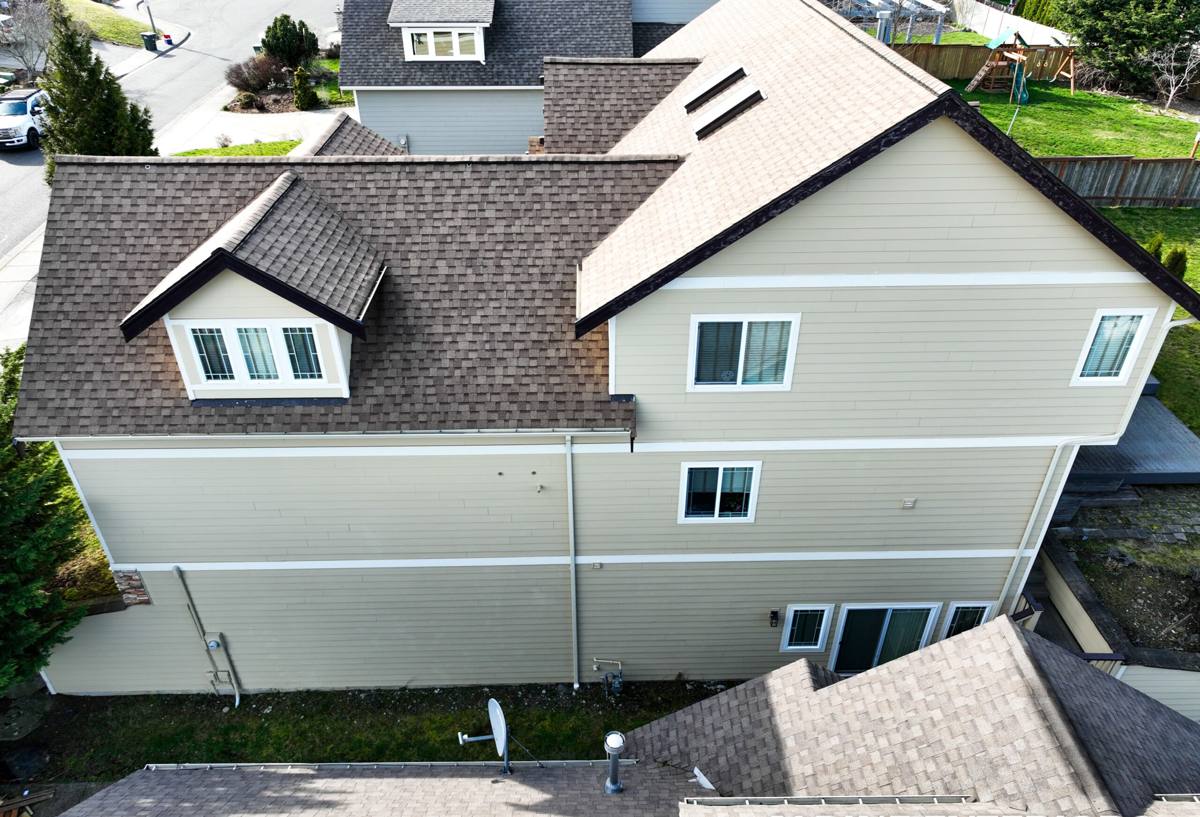
Signs Your Roof Needs Repair Now, Not Later
What You'll Notice Inside
Interior warning signs are usually the first thing homeowners catch, and they're worth acting on quickly because water rarely stays where it enters.
- Brown or yellow staining on ceiling drywall, especially near exterior walls or chimneys
- A musty smell in an attic or top-floor closet that wasn't there before
- Peeling paint or bubbling drywall tape near the roofline
- Daylight visible through the attic roof deck
- Insulation that feels damp or has visibly compacted in one area
What Shows Up Outside
From the ground, look for missing, curling, or cracked shingles; dark streaking or thick moss mats, especially on north-facing slopes that stay shaded most of the day; sagging in the roof line; and rust or gaps at flashing around chimneys, vents, and skylights. In Mount Vernon, moss buildup is often the first visible symptom, but it's rarely the actual problem — it's usually a sign that a section of roof is holding moisture longer than it should.
Why Timing Matters Here
In a climate where the wet season runs long, waiting to address a known issue rarely makes things better. Moisture problems in Skagit County tend to compound week after gray week rather than dry out and resolve on their own, and a small flashing gap or lifted shingle caught early is a much smaller job than the same issue after months of repeated soaking.
What a Correct Repair Actually Involves
A roof repair that actually lasts starts with figuring out why the roof failed in the first place, not just patching the spot where water is showing up inside the house. Water travels along rafters, sheathing seams, and underlayment before it ever drips onto a ceiling, so the leak point and the damage point are often several feet apart.
Diagnosis Before Repair
We trace the path of intrusion from the interior stain or attic evidence back to the actual entry point on the roof surface — usually a flashing failure, a cracked or lifted shingle, a nail that's backed out, or underlayment that's failed at a seam. Guessing at the location and slapping sealant on the nearest visible gap is how repairs fail within a year.
Matching Materials and Technique
Whenever possible, we match the repair to your existing roofing material and color so the patch doesn't stand out or create a mismatched surface that ages differently than the rest of the roof. Flashing gets rebuilt to shed water correctly, not just resealed with caulk. Underlayment gets replaced in the repaired section, not left in place if it's already saturated. Any decking that's gone soft or delaminated from sitting wet gets cut out and replaced — patching over rotten sheathing just moves the failure a season or two down the road.
Repair Documentation
Any repair we perform comes with a clear written description of the work completed and what's covered if a related issue shows up afterward, so you have documentation on file rather than a verbal promise.
Common Repair Situations We See Around Mount Vernon
| Issue | Typical Cause Locally | What the Repair Involves |
|---|---|---|
| Leak at chimney or skylight | Flashing seals broken down by repeated wet-dry cycles | Remove and rebuild flashing with proper step and counter-flashing, not surface caulk |
| Heavy moss on shaded slopes | North-facing roof sections that stay damp for days after rain | Careful moss removal, treatment, and repair of any shingle damage moss roots caused |
| Curling or cracked shingles | UV and moisture cycling over time, more pronounced on older roofs | Selective shingle replacement matched to existing color and profile |
| Soft or stained decking | A slow leak that went unnoticed for one or more wet seasons | Cut out and replace affected sheathing before re-covering the area |
| Clogged valleys and gutters | Fir and cedar debris combined with near-constant fall and winter rain | Clear debris, confirm valley flashing is intact, correct any water backup damage |
Our Repair Process
We keep the process straightforward because homeowners dealing with a leak don't need extra complexity added on top of it.
- Inspection. We walk the roof and the attic where accessible, looking for both the visible damage and the actual entry point causing it.
- Honest assessment. We tell you what we found, what caused it, and whether a targeted repair is the right call or whether the roof's age and condition point toward replacement instead.
- Written scope and price. You get a clear explanation of what work is being done and why before anything is scheduled.
- The repair. We complete the work, matching materials where possible and rebuilding flashing and underlayment properly rather than surface-patching.
- Cleanup and check. We clear debris from the work area and confirm the repair is watertight before we consider the job done.
Repair or Replace? How We Help You Decide
Not every roof problem calls for a full replacement, and not every leak should be treated as a simple patch. The right call depends on the roof's age, how widespread the damage is, and how many times it's already been repaired.
| Factor | Leans Toward Repair | Leans Toward Replacement |
|---|---|---|
| Roof age | Under 15–20 years, depending on material | Near or past the material's expected service life |
| Extent of damage | Isolated to one section or feature | Spread across multiple slopes or repeated failures |
| Decking condition | Sound, dry sheathing under the affected area | Widespread soft or delaminated decking |
| Repair history | First or second repair in this location | Same spot has been patched multiple times already |
We'll always give you the honest read rather than steering you toward the bigger job. Plenty of Mount Vernon roofs just need a well-executed, targeted repair to get several more good years out of them.
What Affects the Cost of a Roof Repair
Every repair is different, so a fair estimate depends on seeing the actual damage rather than quoting a number over the phone. That said, a few factors consistently drive cost up or down on the repairs we see around Mount Vernon.
| Factor | Why It Matters |
|---|---|
| Size of the affected area | A single flashing repair costs far less than replacing shingles and decking across a whole slope |
| Roof pitch and access | Steeper roofs and homes with limited access take longer and require more safety setup |
| Decking condition | If sheathing underneath has to be replaced, that adds material and labor beyond the surface repair |
| Material availability | Matching an older or discontinued shingle color can take longer to source than standard materials |
| How the damage was caused | A one-time storm impact is usually simpler to fix than a long-term moisture problem that's spread |
We'll walk you through exactly what's driving the price on your specific repair before any work begins, so there are no surprises once the crew is on the roof.
Moss, Debris, and Keeping a Repair From Becoming a Repeat Visit
A good repair can still fail early if the conditions that caused it aren't addressed too. Skagit County's wet season and heavy tree cover around Mount Vernon mean moss and organic debris are an ongoing maintenance item, not a one-time fix.
- Keep gutters and valleys clear of needles and leaves, especially before the fall rains set in
- Have moss treated before it establishes a thick mat, since moss roots lift shingle edges and hold moisture against the roof surface
- Trim back branches that keep a roof section shaded and slow to dry
- Schedule a roof check after major windstorms, which are common through the winter months here
- Address small leaks right away — a repair costs far less than the decking replacement that follows months of hidden moisture damage
Why Local Experience Matters for This Repair
A roof repair crew that works Skagit County routinely knows which details matter here that wouldn't come up in a drier climate: how moss behaves on shaded northwest-facing slopes, why flashing details need to account for wind-driven rain rather than just vertical rainfall, and which materials hold up against the salt-influenced air moving inland from the Sound. That local pattern recognition speeds up diagnosis and helps avoid repairs that look fine for a season but fail once the wet months set in again.
Homes throughout Mount Vernon and the surrounding Skagit Valley span a wide range of ages and roofing materials, from older homes to newer builds, and each comes with its own quirks in venting, pitch, and how the original roof was detailed. A crew that repairs roofs across this area day in and day out has seen enough variation to recognize what's original construction, what's a past repair attempt, and what actually needs fixing now.
It also means we're not guessing at what normal looks like for a Mount Vernon roof. We know the difference between cosmetic moss staining and moss that's already done structural damage, and between a minor flashing gap and one that's been slowly saturating the decking underneath for months.
If you're seeing a stain on the ceiling, moss creeping across a shaded slope, or just want a second opinion before the winter rains set in, we're happy to take a look. Request a free, no-pressure estimate using the form below and we'll give you a straight answer about what your roof actually needs.