 Anacortes Roofing
 Roof Replacement for Oak Harbor Homes
Oak Harbor sits in the kind of marine environment that's hard on roofs in ways that don't show up in a glossy brochure. Salt-laden air off the water accelerates corrosion on exposed metal fasteners and flashing. Wind-driven rain doesn't just fall straight down — it gets pushed sideways and forced up under shingle edges and around penetrations that would stay dry in a calmer climate. And a long, wet moss season keeps shaded, north-facing slopes damp for months at a stretch, which is exactly the environment moss and moisture-loving growth need to take hold. A roof replacement here isn't just about picking a shingle color. It's about building an assembly that's specifically suited to what this stretch of Skagit County weather does to a house, year after year.
We're an Anacortes-based crew that already works this area regularly, so we're not guessing at what Oak Harbor roofs need — we see the failure patterns firsthand, on real jobs, in real weather.
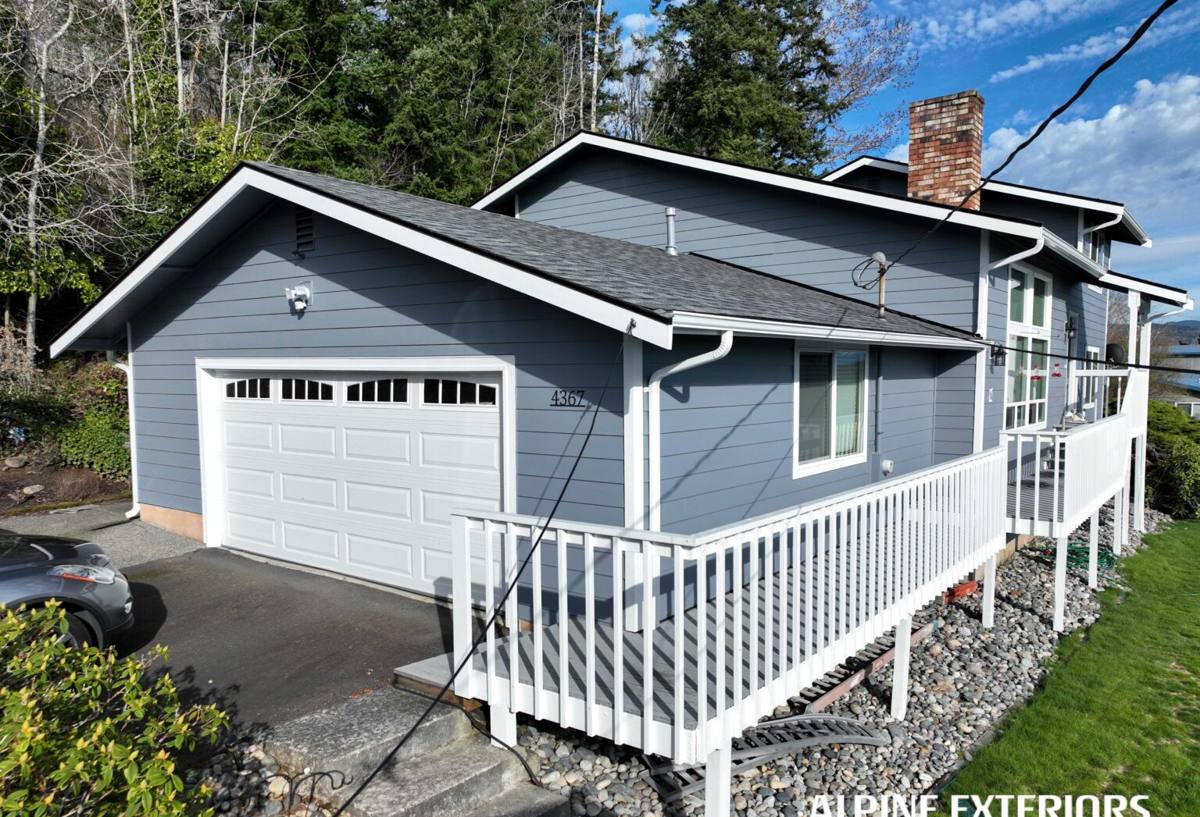
What Local Conditions Actually Do to a Roof
Salt Air and Corrosion
Homes near Puget Sound waters deal with airborne salt that settles on every exposed surface, including roofing hardware. Standard fasteners and lower-grade flashing metal corrode faster here than they would twenty miles inland. Over years, corroded fasteners lose their grip, and corroded flashing develops pinholes and seam failures — both of which lead directly to leaks, often in places that are hard to spot from the ground.
Driving Rain and Wind
Storms off the water regularly bring rain at an angle, not straight down. That matters because a roof designed only to shed water vertically can still leak under sideways-driven rain if the underlayment, flashing laps, and shingle exposure aren't built with that in mind. Wind uplift at eaves, rakes, and ridge lines is also a bigger factor here than in more sheltered inland neighborhoods.
Long Moss Season
Shaded roof planes — particularly north-facing slopes under mature trees, common throughout this area — stay damp far longer than sun-exposed slopes. That extended dampness is what lets moss and algae establish themselves. Once moss roots into a shingle's granule layer, it holds moisture against the roof surface and can lift shingle edges, which shortens the roof's service life well before it would otherwise need replacement.
Signs a Replacement — Not Another Repair — Makes Sense
Not every roof problem calls for a full replacement, and we'll tell you honestly when a repair is the right call. But there's a point where patching individual issues stops making financial sense compared to a full replacement. Signs worth a serious look include:
- Shingles that are cupping, curling, or losing significant granule coverage across large areas, not just one isolated spot
- Repeated leaks in different locations after previous repairs, suggesting the underlayment or decking is failing broadly
- Heavy moss or algae growth that's returned after cleaning, especially on shaded slopes
- Visible sagging in the roofline, which can point to decking or structural issues underneath the shingles
- A roof approaching or past its expected service life for its material type, combined with rising repair frequency
- Daylight visible through the roof deck from inside the attic, or damp insulation near the roofline
What a Correct Roof Replacement Involves
A roof replacement done right is a system, not a single layer of shingles. Every component has to work together, and in a climate like this one, cutting corners on any single layer shows up as a leak within a few years rather than decades.
Tear-Off and Deck Inspection
We remove the old roofing down to the deck rather than layering over existing material. That's the only way to actually inspect the decking for rot, soft spots, or water damage that's been hidden under the old roof — issues that are common on older homes in wetter climates and that need to be addressed before new material goes down.
Underlayment Built for Wind-Driven Rain
Given how often rain here arrives at an angle, underlayment choice and installation matter more than in drier regions. Self-adhering underlayment at eaves, valleys, and other vulnerable areas provides a secondary water barrier that standard felt alone doesn't offer as reliably.
Flashing That Won't Corrode Prematurely
Given the salt air issue described above, we use flashing and fastener materials selected for corrosion resistance rather than the cheapest option available. Flashing at chimneys, skylights, sidewalls, and valleys is where most roof leaks actually originate, so getting this right is not optional.
Ventilation That Matches the Climate
Proper attic ventilation keeps moisture from building up underneath the roof deck, which matters in a consistently damp climate. Balanced intake and exhaust ventilation helps prevent condensation issues that can rot decking from underneath, independent of anything happening on the roof surface above.
Material Selection for Moss Resistance
For homes with significant shade or north-facing slopes, we'll talk through options like algae-resistant shingle products, which use copper or zinc granules to inhibit moss and algae growth over time. It's not a permanent fix — nothing is — but it meaningfully extends the interval between cleanings and slows the kind of granule loss moss causes.
Our Process, Start to Finish
- On-site inspection: We walk the roof and attic, not just look from the ground, and document the actual condition — decking, flashing, ventilation, and current material.
- Honest assessment: We tell you plainly whether replacement is the right call, or whether targeted repairs would reasonably extend the roof's life.
- Written estimate: A clear scope of work and pricing, with material options explained in plain terms — not just a single number with no breakdown.
- Scheduling around weather: Roofing work depends on dry windows, and we plan installation timing accordingly rather than rushing material onto a wet deck.
- Tear-off and deck repair: Full removal of old roofing, with any damaged decking replaced before new material goes down.
- Installation: Underlayment, flashing, ventilation components, and roofing material installed to manufacturer specifications and local code.
- Final walkthrough: We review the finished job with you before considering it complete.
Cost Factors to Understand Before You Get Quotes
Every roof is different, and pricing depends on more than square footage. Understanding what drives cost helps you evaluate bids honestly and avoid comparing quotes that aren't actually apples-to-apples.
| Factor | Why It Affects Cost |
|---|---|
| Roof pitch and complexity | Steep or cut-up roofs with multiple valleys, dormers, and penetrations take longer and require more safety setup than a simple gable roof |
| Decking condition | Hidden rot or water damage found during tear-off means additional material and labor to replace decking before new roofing goes on |
| Material choice | Standard asphalt shingles, architectural shingles, and metal roofing carry different material and installation costs |
| Layers of existing roofing | Removing multiple layers of old material takes more labor and disposal cost than a single-layer tear-off |
| Flashing and ventilation scope | Homes needing new flashing at multiple penetrations or upgraded ventilation add cost but reduce future leak risk |
| Access and site conditions | Tree cover, tight lot lines, or limited equipment access can add time to material staging and cleanup |
Broadly, a full roof replacement is a significant investment, and estimates vary widely based on the factors above. The only way to get an accurate number for your specific home is an on-site inspection — we won't quote a firm price off a phone description.
What to Ask Before Hiring Any Roofing Contractor
Whether you go with us or someone else, these questions separate contractors who do this work correctly from those who don't:
- Are you licensed and insured to work in Washington, and can you provide proof?
- Do you tear off down to the deck, or do you offer overlay installation over existing shingles?
- What underlayment and flashing materials do you use, and why those specifically?
- How do you handle decking repair if rot or damage is found during tear-off?
- What does your workmanship warranty cover, and for how long, separate from the manufacturer's material warranty?
- Do you have experience working on homes in this specific area, dealing with this specific climate?
- Will you provide a written, itemized estimate before work begins?
Why a Local Anacortes Crew Matters for This Job
A roofing crew that works Skagit County regularly already knows which slopes in this area hold moisture longest, which fastener and flashing materials hold up against salt air over time, and how local wind patterns tend to drive rain into vulnerable spots. That's knowledge that comes from doing the work here repeatedly, not from a general training manual. It also means we're accountable locally — if a question comes up after the job is done, we're not a crew that drove in from out of the area and moved on.
We're also familiar with permitting and inspection expectations in this part of Washington, which keeps the process moving without avoidable delays.
Maintaining Your New Roof
A correctly installed roof still benefits from basic upkeep, especially in this climate. A few habits go a long way toward getting the full service life out of a new roof:
- Keep gutters clear so water isn't backing up under the roof edge, particularly during heavy fall and winter rain
- Trim back tree limbs that shade roof slopes and drop debris, since both extend how long a surface stays damp
- Schedule periodic moss and debris removal on shaded slopes before growth becomes established, rather than after
- Have the roof visually checked after major storms for lifted shingles or displaced flashing
- Address small leaks immediately rather than waiting, since minor moisture intrusion compounds quickly in a wet climate
If your Oak Harbor home's roof is showing its age, or you just want an honest opinion on whether repair or replacement makes more sense, we're glad to take a look. Request a free, no-pressure estimate using the form below and we'll walk the roof with you and give you a straight answer.