 Anacortes Roofing
 Windows Built for Skagit County's Wet Side
Sedro-Woolley sits inland along the Skagit River, which spares it some of the direct salt air that coastal Anacortes homes deal with year-round. But the two towns share the same weather system, and that means the same long stretch of driving rain, heavy valley humidity, and a moss season that can run eight months or more. Our crews work both areas, and we've learned that windows here fail for different reasons than windows in drier parts of the state. It's rarely the glass itself — it's what happens around it: swelling wood frames, saturated trim, and moisture that finds its way behind flashing that was never properly lapped in the first place.
Custom windows, done right, aren't about a fancy shape or a showroom upgrade. For Sedro-Woolley homes, "custom" usually means matching an odd opening in an older farmhouse, correcting a rough opening that was never square to begin with, or specifying a frame material and glazing package that can actually stand up to a wet Skagit Valley winter without rotting, fogging, or sticking shut by February.
What "Custom" Actually Means Here
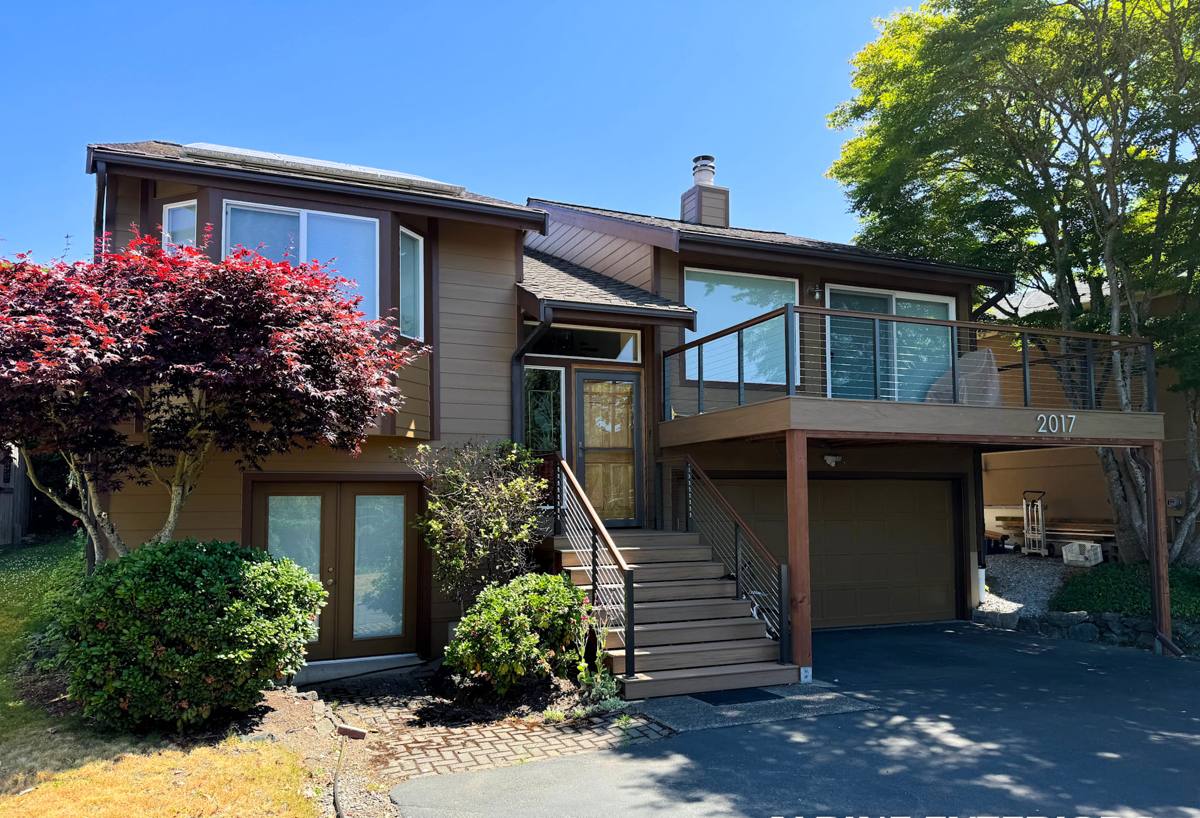
A lot of homeowners hear "custom windows" and assume it means custom shapes — arches, odd angles, oversized picture windows. Sometimes it does. But in Sedro-Woolley's older housing stock, the more common need is custom sizing: openings that don't match any stock window on a big-box shelf because the house was framed by hand decades ago and has settled since. Forcing a stock-size window into an out-of-square opening is one of the most common causes of the leaks we get called to fix.
Custom work means we field-measure every opening individually, order (or build out) frames to match, and correct any rot or squareness problems in the rough opening before the new window ever goes in. Skipping that step is how a brand-new window ends up leaking within a year — the window itself isn't the problem, the opening it went into was.
Common Sedro-Woolley Window Situations
- Older single-pane wood windows that have swollen shut or won't stay latched
- Rough openings that have shifted out of square with the house's settling
- Vinyl replacement windows installed without proper flashing, now showing interior staining
- Farmhouse or barn-style homes needing non-standard sizes or trim profiles
- North- and west-facing walls with visible moss or algae streaking below the sill
Signs Your Windows Are Losing the Fight
Because Skagit Valley moisture works slowly, window failure here rarely announces itself with a dramatic leak. It shows up as small things that get worse over a few wet seasons.
- Soft or discolored wood trim at the bottom corners of the frame
- Condensation building up between panes on double-glazed units (a broken seal, not a cleaning problem)
- Windows that are harder to open and close than they used to be
- Visible daylight or a draft when you run a hand along the frame edge
- Moss or dark streaking on the siding directly below a window sill
- Musty smell near a window that doesn't go away with ventilation
Any one of these on its own isn't an emergency. Two or three together, especially on a wall that takes the brunt of our prevailing weather, usually means the window and the flashing behind it both need attention.
Frame and Glass Options
There's no single "best" window material — the right call depends on the house, the budget, and how much upkeep you want to take on. Here's how the common options compare for a Skagit County climate:
| Frame Material | Moisture Behavior | Maintenance | Typical Fit |
|---|---|---|---|
| Vinyl | Won't rot; seams need good installation to stay watertight | Low — occasional cleaning | Most homes, budget-conscious replacements |
| Fiberglass | Very stable in wet/humid swings, minimal expansion | Low | Higher-end replacements, larger openings |
| Wood (clad exterior) | Good if the exterior cladding stays intact; interior wood still needs protection | Moderate — watch cladding seams | Historic or period-style homes |
| Aluminum | Conducts cold, prone to interior condensation without thermal breaks | Low | Limited use; we recommend thermally-broken frames only |
On glass, a dual-pane unit with a low-E coating and argon fill is the standard we install for this climate — it manages heat loss in winter and controls interior condensation, which matters more here than in drier regions because of how much ambient humidity the valley holds through the cold months.
Our Installation Process
- On-site assessment. We check every opening for square, rot, and existing flashing condition before quoting anything.
- Measurement and ordering. Custom or near-custom sizing is measured directly from the opening, not assumed from a standard chart.
- Opening prep. Any soft wood, failed sheathing, or old caulk-only "flashing" gets cut out and corrected — this is the step that determines whether the window lasts.
- Weather-resistive barrier and flashing. Sill pan, jamb flashing, and head flashing are installed in the correct shingle-lap order so water sheds outward at every layer.
- Window set and shim. The unit is leveled, shimmed, and fastened per manufacturer spec — not just caulked into place.
- Insulation and seal. Low-expansion foam or backer rod around the frame, sealed with exterior-grade sealant rated for our climate.
- Interior and exterior trim. Trim is finished and sealed to match the home, with final inspection for operation and weather seal.
Why the Flashing Matters More Than the Window
We say this a lot because it's the single most common mistake we find on service calls: a perfectly good window, installed with no sill pan or with flashing taped in the wrong order, will leak. Water runs downhill and outward — every layer of flashing has to be lapped so the one above sheds onto the one below, all the way down to the sill pan that catches anything that gets past the frame. In a climate that gets driving, wind-blown rain instead of straight-down rain, a window that's "close enough" on flashing will eventually show it, usually as interior staining or soft trim a year or two later. This is also why we don't recommend caulk-only installations, even though they're faster and cheaper: caulk is a backup seal, not a drainage plane, and it's the first thing to fail under UV and constant wet-dry cycling.
What Drives the Cost
Every quote is specific to the house, but these are the main factors that move the price up or down:
| Factor | Effect on Cost |
|---|---|
| Standard size vs. custom/odd-shaped opening | Custom sizing costs more in materials and labor time |
| Frame material (vinyl vs. fiberglass vs. clad wood) | Fiberglass and clad wood run higher than vinyl |
| Condition of the existing rough opening | Rot repair or reframing adds labor beyond the window itself |
| Number of windows done at once | Per-unit cost typically drops with a full-house or multi-window job |
| Glass package (standard low-E vs. upgraded coatings) | Upgraded glazing adds cost but improves comfort and condensation control |
| Trim and interior finish work | Matching existing trim profiles or painted finishes adds labor |
We'd rather walk your specific windows with you and give an honest number than quote a range that doesn't mean much for your house.
Why a Crew That Already Works Sedro-Woolley Matters
A window installer who's never worked west of the mountains can still install a window correctly on paper and still get it wrong for this climate — the flashing details that matter here aren't universal, they're specific to how much wind-driven rain a wall actually takes over a wet season. Working across Anacortes and into Sedro-Woolley regularly means we see the same failure patterns repeat: openings that were flashed for a drier climate, trim that was never back-primed, sills without a proper pan. That's not a knock on any one product or brand — it's a maintenance and installation-sensitivity issue that shows up over time regardless of what window you bought, if the install skipped the details that matter here.
Knowing the area also means knowing which walls on a typical Sedro-Woolley home take the worst of the weather, which helps us prioritize if you're not replacing every window at once.
Keeping New Windows Performing
A correctly installed window still needs basic upkeep to hit its full lifespan in this climate:
- Clear debris and moss from sills and tracks each fall before the wet season sets in
- Check exterior caulk lines yearly for cracking or separation
- Keep gutters clear so overflow doesn't run down over window heads
- Wipe down interior condensation on cold mornings rather than letting it sit on the sill
- Trim back vegetation that keeps a window in constant shade and dampness
If your Sedro-Woolley home has windows showing any of the wear signs above, or you're planning a fuller renovation and want them done right the first time, we're happy to take a look. Estimates are free, there's no pressure, and you'll get a straight answer about what your windows actually need — just fill out the form below.