 Anacortes Roofing
 Why Sedro-Woolley Siding Takes a Different Kind of Beating
Sedro-Woolley sits in a part of Skagit County that gets the worst of both worlds — close enough to Puget Sound and the Salish Sea to pick up salt-laden air on a west wind, and far enough into the foothills to catch heavier, longer rain events off the Cascades than homes closer to the water. Add in the shade from mature trees along so many Sedro-Woolley lots and you get a recipe that's tough on exterior siding: constant moisture, slow-drying surfaces, and months of moss and algae growth every year. We've repaired siding all over this stretch of the county, and the failure patterns here are consistent enough that we can usually tell what's wrong before we even get a ladder up.
None of this means siding repair has to be a recurring headache. It means the repair has to actually address moisture and organic growth, not just patch the visible damage and hope. That's the standard we hold every Sedro-Woolley repair job to.
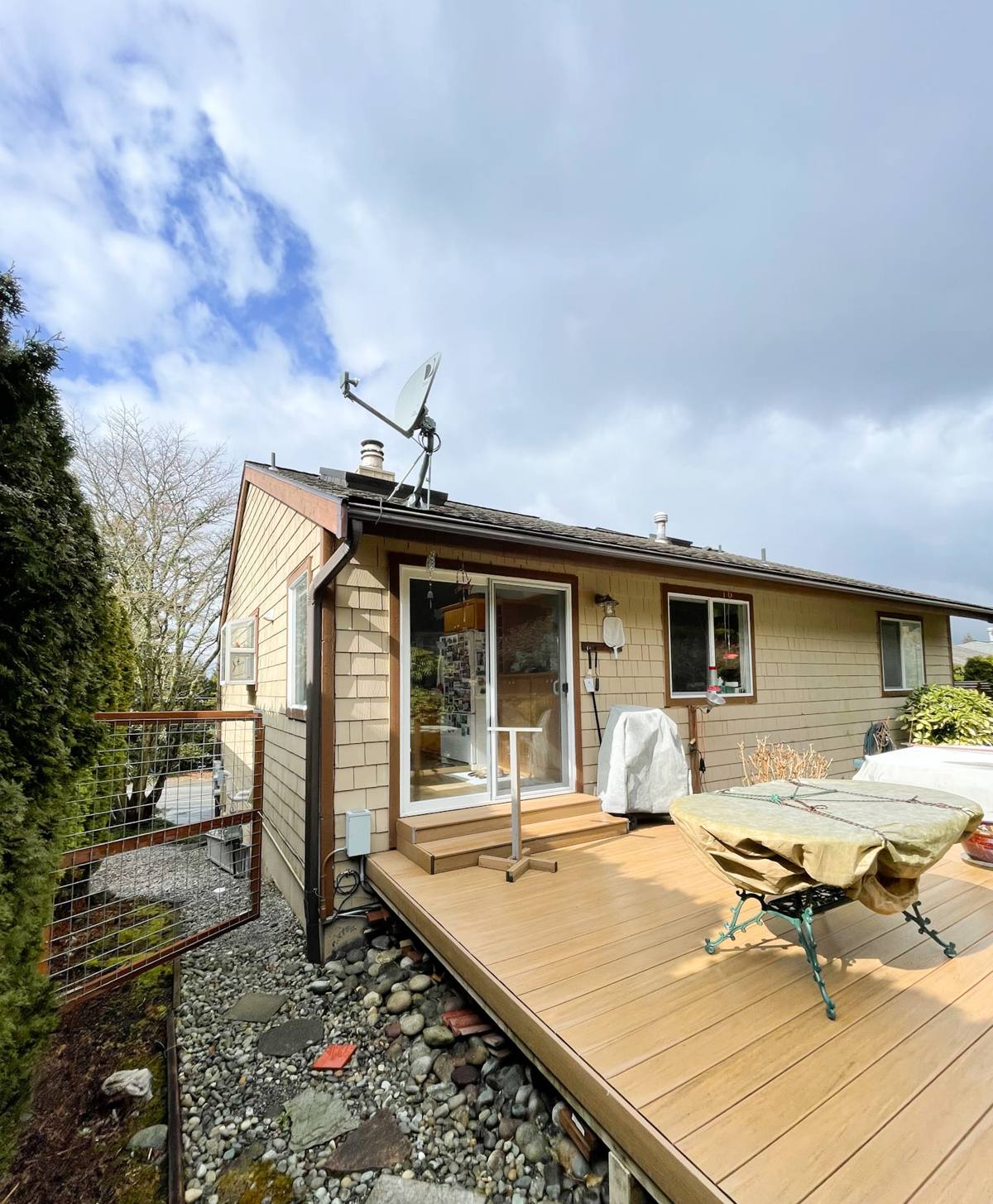
What Actually Goes Wrong With Siding in This Climate
Moss and Algae Aren't Just Cosmetic
A green or black tint on north-facing siding is more than an eyesore. Moss holds moisture against the siding surface for days after a storm has passed, which is exactly the wrong condition for most siding materials — wood-based products soften and rot underneath the growth, and even durable materials can suffer at the seams and fasteners if moisture is trapped long enough. In Sedro-Woolley's tree-shaded neighborhoods, north and east walls are almost always the first to show it.
Driving Rain Finds the Weak Points
Wind-driven rain doesn't fall straight down — it gets pushed sideways into laps, seams, and trim intersections. Where flashing was skipped, caulk has failed, or siding panels were installed too tight to the ground or a deck surface, water works its way behind the cladding. By the time a homeowner notices a soft spot or a stain on the interior wall, the damage has usually been building for a season or more.
Salt Air Accelerates Everything
Homes on higher ground or with more open exposure toward the water pick up salt in the air, which speeds up corrosion on fasteners, trim flashing, and any exposed metal components. Corroded fasteners loosen, panels shift, and gaps open up that let in even more water. It's a slow process, but it's a real one, and it's part of why we inspect fastener condition on every repair call, not just the siding surface itself.
Signs a Sedro-Woolley Home Needs Siding Repair
- Soft, spongy, or bubbling spots when you press on the siding, especially near the bottom courses
- Visible gaps, cracks, or separation at panel seams and corner trim
- Persistent moss, algae, or black streaking that keeps returning after cleaning
- Peeling or bubbling paint, or a chalky residue on painted wood or older fiber cement
- Warped, cupped, or buckled panels — a sign of moisture trapped behind the material
- Stains, musty odor, or discoloration on interior walls that back up to exterior siding
- Rusted or backed-out nails and fasteners visible on the siding surface
- Woodpecker holes or soft wood confirmed by a screwdriver test — often a sign of rot underneath
Any one of these is worth a call. A few of them together usually means water has been getting behind the siding for a while, and the repair needs to address the water path, not just the surface symptom.
What a Correct Repair Actually Involves
Siding repair done right is diagnostic work first, carpentry second. We don't just replace the board that looks bad — we find out why it failed and fix that cause, or the same spot fails again in two or three years.
Our Repair Process
- Inspect beyond the visible damage. We check the framing and sheathing behind failed siding for rot, check adjacent panels and trim for hidden moisture, and look at flashing, caulk lines, and drainage paths that may have contributed to the failure.
- Identify the water source. Whether it's a missing kick-out flashing, a caulk joint that's failed, siding installed too close to grade, or moss holding moisture against the wall, we pin down the actual cause before we touch a saw.
- Remove and assess. Damaged siding, trim, and any compromised sheathing or framing come out. We don't cover over rot — anything soft gets replaced.
- Correct the underlying issue. This might mean adding or repairing flashing, re-establishing proper clearance from grade or a deck surface, or correcting a nailing pattern that was too tight or too loose.
- Match and install. We match existing siding profile, exposure, and color as closely as possible for a patch repair, or discuss a broader section replacement if matching won't hold up visually or functionally.
- Seal and finish. Proper caulk at the right joints (and not over joints that need to breathe), touch-up or full-panel finish work, and a final check of surrounding trim and flashing.
Repair vs. Replace: How We Help You Decide
| Factor | Repair usually makes sense | Replacement is often smarter |
|---|---|---|
| Extent of damage | Isolated to one or two wall sections | Multiple elevations, especially north/shaded sides |
| Underlying material condition | Rest of the siding is sound and well-adhered | Widespread softness, warping, or repeated past patches |
| Age of existing siding | Newer install, isolated failure point | Original siding is decades old or a discontinued product |
| Match availability | Current siding profile/color still available | Product discontinued — patches will always look different |
| Root cause | Localized flashing or caulk failure | Systemic issue (drainage plane, grading, ventilation) |
We'll always give you a straight answer on which side of that table your home falls on. Plenty of Sedro-Woolley homes with otherwise sound siding just need a targeted repair — we're not going to push a full replacement when a repair will hold up.
Why We Repair With — and Recommend — James Hardie Fiber Cement
When a repair section needs new material, or a homeowner asks what to replace failing wood, LP SmartSide, or vinyl with, our answer is James Hardie fiber cement. It's the only siding product we install, and in a climate like Skagit County's, the reasons are practical, not brand loyalty.
Fiber cement doesn't feed moss and algae growth the way wood-based products can, and it holds up to sustained moisture exposure far better than engineered wood siding, which can swell and deteriorate at cut edges and seams if water gets in. Hardie's ColorPlus factory finish is baked on and warranted against fading and peeling, which matters on the same north and shaded walls where we see the most moss and finish failure on painted wood siding. And Hardie's HZ5 product line is engineered specifically for wetter climate zones — a real consideration for a town that sees as much sustained rain as Sedro-Woolley does.
We won't tell you vinyl or engineered wood siding can't work anywhere — they have their place. But for repair sections and full replacements on homes we service in this climate, we've standardized on fiber cement because it's what holds up with the least maintenance burden over the life of the siding, and it carries a strong transferable warranty when installed to spec.
Why Local Experience Matters for This Job
Siding repair isn't a one-size-fits-all trade. A crew that mostly works drier inland climates can miss the moss-driven moisture patterns, salt air fastener corrosion, and driving-rain flashing failures that show up consistently on Sedro-Woolley homes. Because we work throughout Skagit County, we've seen these failure patterns enough times to recognize them quickly — which saves you money on the diagnostic side of the job, and means the fix addresses the actual cause instead of just the symptom.
We also know which details matter most for this specific microclimate: proper clearance at grade, correct flashing at window and door heads, drainage behind the cladding, and finish products rated for sustained moisture exposure. Those aren't universal siding details — they're the ones that matter here.
What to Expect When You Call Us
- A straightforward inspection of the damaged area and surrounding siding — we look at the whole wall, not just the spot you noticed
- An honest assessment of repair vs. replacement, explained in plain terms
- A written estimate that separates the cause-of-failure fix from the cosmetic repair, so you know what you're paying for
- Straight talk about material options, including why we lean toward fiber cement for anything beyond a small patch
- No pressure to upsell a full replacement when a targeted repair will genuinely hold up
If you're seeing soft spots, recurring moss, gaps at the trim, or just want a second opinion on siding that's starting to look tired, we'll come take a look. Reach out for a free, no-pressure estimate — we'll tell you honestly what's going on and what it'll take to fix it right.