 Anacortes Roofing
 Oak Harbor's Siding Has a Different Job Than Siding Inland
Oak Harbor sits right on the water, and that changes what a house needs from its exterior. Homes here take on a mix of stresses that inland Skagit County houses simply don't see as often: salt-laden air blowing off the Salish Sea, wind-driven rain that hits siding sideways instead of straight down, and a long, damp shoulder season every fall and winter where moss and algae get a serious head start. None of that is exotic or rare — it's just the baseline environment for anyone living close to the water on Whidbey Island and the surrounding Puget Sound shoreline. Siding that isn't matched to those conditions tends to show it early, in ways that are cosmetic at first and structural later.
We install siding on homes in this stretch of Washington regularly, and Oak Harbor jobs get the same attention to flashing, moisture management, and product selection as any other coastal property we work on. This page is about what that actually looks like — what the climate demands, what a correct installation involves, and why we've standardized on one product system instead of offering a menu of options.
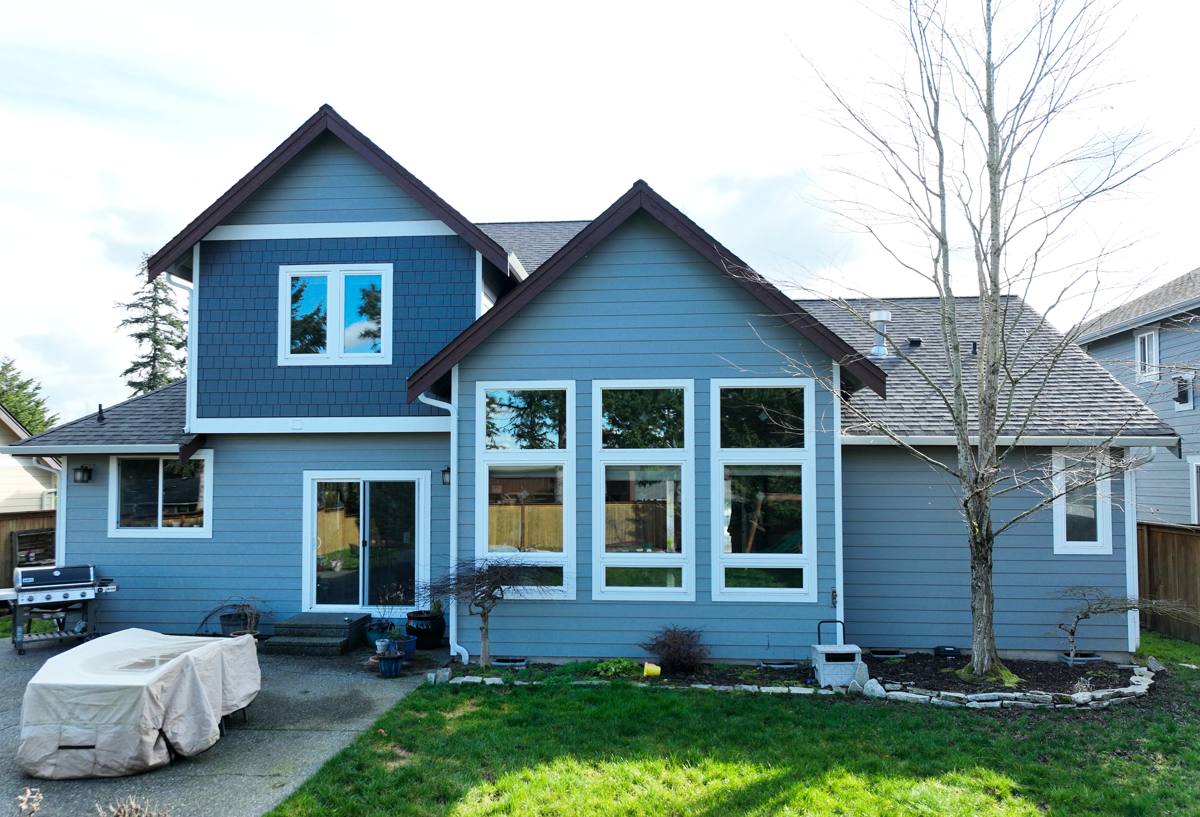
What Salt Air, Driving Rain, and Moss Season Actually Do to Siding
Salt Air
Airborne salt is corrosive to metal fasteners, flashing, and trim, and it accelerates the breakdown of finishes that aren't formulated to resist it. Over years, a house facing the water can see fastener corrosion, fading, and finish chalking well ahead of what you'd expect on the same product installed twenty miles inland. This is one of the biggest reasons product and fastener choice matters more here than in a typical suburban installation.
Driving Rain
Wind off the water doesn't just fall on a house — it pushes rain sideways and up under laps, trim edges, and penetrations. A siding system depends on correct lap spacing, properly bedded flashing, and a functioning water-resistive barrier behind it to stay dry. When any of those details are shortcut, wind-driven rain finds the gap that ordinary rainfall never would.
Moss Season
Western Washington's wet months run long, and on shaded or north-facing walls near mature trees, that dampness sits on the siding surface for extended stretches. Moss and algae need exactly that — sustained moisture and low sun exposure — and once established they hold water against the siding surface, which is bad for almost any material, and worse for some than others.
Why We Only Install James Hardie Fiber Cement
We made a decision as a company to install one siding system — James Hardie fiber cement — rather than offer vinyl, LP SmartSide, primed wood, cedar, or other fiber cement brands like Cemplank or Allura. That's not a marketing position, it's a practical one, and it matters even more on a job like Oak Harbor where the exposure is higher than average.
- Non-combustible material. Fiber cement doesn't burn, which matters given Washington's wildfire seasons and the general value of non-combustible exterior materials on any home.
- Engineered for wet, coastal climates. Hardie's HZ10 product line is specifically formulated for wetter regions, including moisture and freeze-thaw performance that generic fiber cement isn't always engineered around.
- Factory-applied ColorPlus finish. The finish is baked on under controlled conditions rather than site-applied, which gives more consistent color retention and adhesion than field-painted siding — a real advantage in a salt-air environment where finishes take a beating.
- Dimensionally stable. It doesn't swell, cup, or rot the way wood-based products can when they take on repeated moisture, which is relevant on walls that stay damp for weeks at a time in moss season.
- Strong transferable warranty backed by a manufacturer with decades in the fiber cement category, not a startup product line.
None of this means other products are unusable everywhere — vinyl and engineered wood sidings have their place and plenty of manufacturers stand behind them. But we don't think they're the right call for the exposure conditions common on Whidbey Island and the surrounding coastline, and we'd rather install one product well than several products with reservations. If a homeowner wants to understand the trade-offs of vinyl or LP SmartSide specifically, we're glad to walk through them honestly.
What a Correct Siding Installation Involves
The siding panel itself is only part of the system. Most siding failures we get called to look at — regardless of brand — trace back to installation details, not the material itself. A correct job includes:
Water-Resistive Barrier and Flashing First
Before a single piece of siding goes up, the wall needs a properly lapped weather-resistive barrier and correctly integrated flashing at every window, door, and penetration. This is the layer that actually keeps a house dry — siding is the second line of defense, not the first.
Fastener Selection
In a salt-air environment, fastener corrosion resistance isn't optional. We use fasteners rated for the exposure and follow Hardie's fastening specifications for pattern, spacing, and embedment, because under-driven or over-driven fasteners are a common cause of premature siding problems.
Proper Clearances
Siding needs clearance from the ground, roof lines, decks, and hardscape — generally a minimum of a few inches depending on the detail — so that splashback and standing moisture don't sit against the bottom edge of the panel. This is a small detail that gets skipped often and causes outsized problems later.
Caulking and Sealant Discipline
Joints, butt seams, and trim intersections need the right sealant, applied correctly, not as a cosmetic afterthought. Over-reliance on caulk to cover a bad flashing detail is a shortcut that fails within a few seasons.
Ventilation Behind the Cladding
Depending on the wall assembly, a rainscreen or drainage gap behind the siding gives incidental moisture a path to drain and dry rather than sitting trapped against the sheathing — especially valuable on walls that face prevailing wind-driven rain.
Our Process for an Oak Harbor Siding Installation
| Step | What Happens |
|---|---|
| 1. On-site assessment | We walk the exterior, check existing siding and sheathing condition, note exposure direction, shading, and any moisture or moss patterns already visible. |
| 2. Tear-off and sheathing check | Old siding comes off and we inspect the sheathing and framing underneath for hidden rot or moisture damage before anything new goes up. |
| 3. Weather barrier and flashing | New water-resistive barrier is installed and lapped correctly; flashing is integrated at every window, door, and penetration. |
| 4. Hardie panel installation | Panels, fasteners, and clearances are installed to Hardie's specifications for the HZ10 climate zone. |
| 5. Trim, caulking, and finish details | Trim is installed, joints sealed, and the finish is inspected for consistency before walkthrough. |
| 6. Final walkthrough | We review the completed job with the homeowner and cover basic care and maintenance expectations going forward. |
Why Local Experience Matters for This Job
A siding crew that mostly works inland neighborhoods doesn't run into wind-driven rain details or salt-air fastener corrosion very often, and it shows in the small decisions made on the job — flashing laps, fastener choice, clearance details. A crew that regularly works Anacortes, Oak Harbor, and the rest of the Skagit County coastline has already made those calls dozens of times and knows which details actually matter for this specific environment versus which are inland habits that don't transfer well to a waterfront exposure.
There's also a practical logistics side to it. Local crews know realistic weather windows for this stretch of coastline, understand seasonal moisture patterns on shaded and north-facing walls, and aren't guessing at how a wall assembly will perform three winters from now — they've already seen how similar assemblies held up on nearby homes.
Signs Oak Harbor Homeowners Should Watch For
- Moss or algae growth that returns quickly after cleaning, especially on shaded or north-facing walls
- Soft spots, bubbling, or visible swelling in existing siding, particularly near the bottom courses or trim joints
- Rust staining below fasteners or trim pieces
- Fading or chalking that's noticeably worse on the water-facing side of the house than other elevations
- Gaps, cracking, or separation at butt joints and corner trim
- Peeling or bubbling paint on wood-based siding after wet winters
None of these on their own mean full replacement is necessary, but they're worth having looked at before they turn into sheathing or framing damage, which costs considerably more to fix.
Cost Factors for a Siding Installation Project
Every home is different, and we don't publish blanket per-square-foot pricing because it's genuinely dependent on the specifics of the house. That said, the factors that tend to move the number are consistent:
| Factor | Why It Matters |
|---|---|
| Home size and wall complexity | More corners, gables, and trim detail means more labor and material cutting |
| Existing sheathing condition | Rot or moisture damage found during tear-off adds repair scope before new siding can go on |
| Siding profile and trim style | Lap width, shingle-style panels, and trim detail level affect both material and labor cost |
| Access and site conditions | Waterfront lots, steep grades, or tight setbacks can affect equipment and staging |
| Removal and disposal of old siding | Volume and type of material being removed affects disposal cost |
The only way to get a real number is a walkthrough of the actual house, which is exactly what a free estimate is for.
Let's Take a Look at Your Home
If your Oak Harbor home's siding is showing its age, or you're planning ahead for a replacement, we're happy to come take a look and give you an honest assessment — no pressure, no obligation. Fill out the form below to schedule a free estimate.