 Anacortes Roofing
 Skyline's Siding Problem Isn't Like Everyone Else's
Skyline sits close enough to the water that salt air is a daily fact of life, and close enough to Anacortes's tree cover that shade, moisture, and moss are just as constant. That combination is harder on exterior siding than either factor alone. Homes a few miles inland in Skagit County deal with rain. Homes right on the water deal with salt. Skyline homes deal with both, plus wind-driven rain that gets pushed sideways into corners, trim, and butt joints that a calmer site would never test.
We work on siding across Anacortes and the surrounding area, but a repair crew that has actually spent time on Skyline roofs and walls knows which elevations take the worst of the weather, where moss builds up fastest, and which original installation shortcuts tend to fail first in this specific setting. That local pattern recognition is the difference between a repair that solves the problem and one that just covers it up for a season.
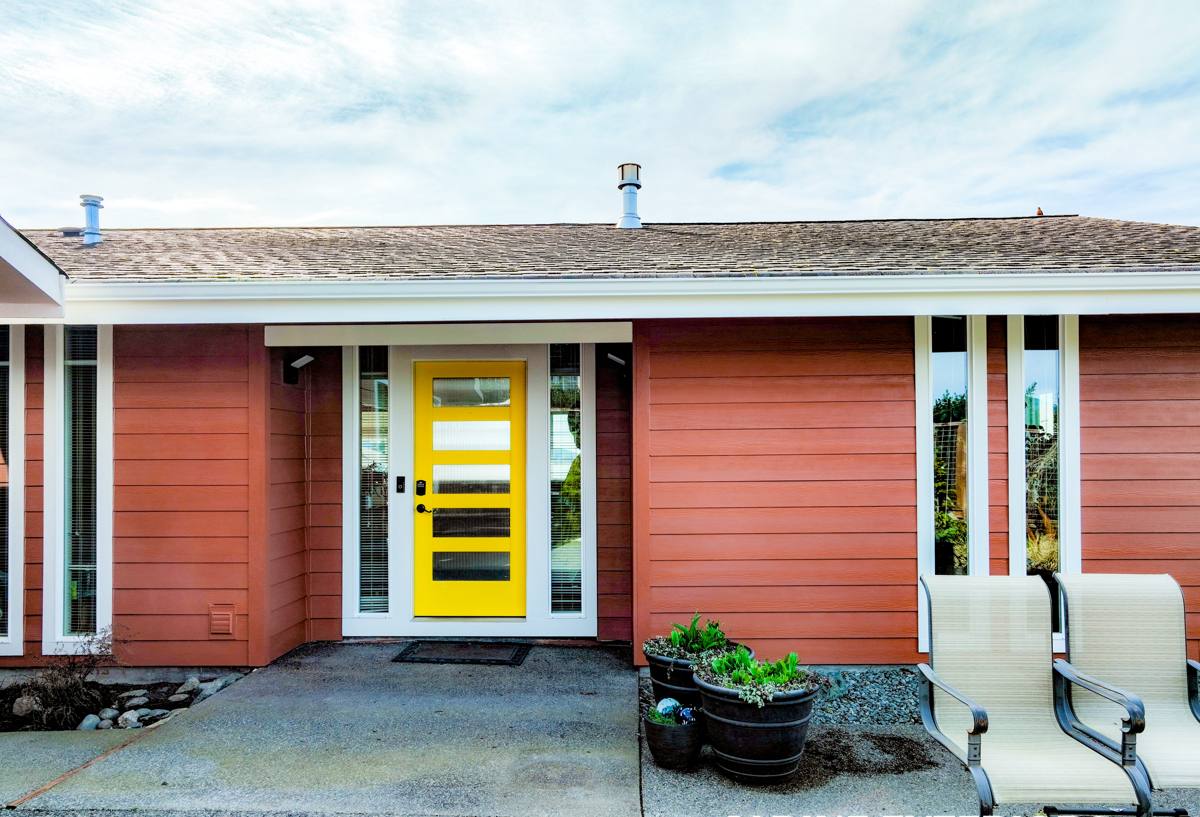
What Salt Air, Rain, and Moss Actually Do to Siding
Salt Air
Airborne salt doesn't just sit on the surface — it works into fasteners, flashing, and any exposed raw edge of siding material. Over years, it accelerates corrosion on nails, screws, and metal trim, and it can degrade paint and finish coatings faster than inland exposure would. Siding that isn't engineered or finished for coastal conditions tends to show fading, chalking, and fastener staining earlier than the manufacturer's literature would suggest.
Driving Rain
Fidalgo Island storms don't always fall straight down. Wind-driven rain gets forced up under laps, into seams, and behind trim boards that were caulked instead of properly flashed. Once water gets behind siding, it doesn't dry out quickly in our climate — humidity stays high enough, long enough, that trapped moisture becomes rot, mold, or delamination before anyone notices from the ground.
Moss and Shade
Skyline's tree cover is part of what makes the area attractive, but shaded, damp wall sections are exactly where moss and algae take hold. Moss holds moisture directly against the siding surface far longer than open, sun-exposed walls, which is why north-facing and tree-shaded elevations are almost always the first place we find soft spots, staining, or failing caulk lines during an inspection.
Signs Skyline Homeowners Should Watch For
- Soft or spongy spots when you press on siding near the bottom edge or around window trim
- Dark streaking, green-black staining, or visible moss growth, especially on shaded walls
- Cracked, bubbling, or peeling paint that keeps coming back in the same spots
- Nail heads that are rusting, popping out, or leaving rust streaks down the siding face
- Gaps opening up at butt joints, corner boards, or where siding meets trim or flashing
- A musty smell near an exterior wall, or interior drywall staining on that same wall
- Visible warping, buckling, or separation between siding courses
Any one of these on its own might be minor. Several together, especially on the same wall section, usually means water has been getting behind the siding for a while.
Why We Only Work With James Hardie Fiber Cement
We do not install or repair siding jobs using vinyl, LP SmartSide, Cemplank, Allura, or primed spruce or cedar. That's a deliberate standard, not a sales pitch, and it matters most in an environment like Skyline's where salt, moisture, and shade are all working against the siding at once.
Fiber cement is non-combustible and dimensionally stable — it doesn't expand and contract with moisture the way wood-based products can, which matters when a wall is cycling between soaked and drying out for months of the year. James Hardie's ColorPlus factory finish is baked on and warrantied against peeling and fading in a way field-applied paint isn't, which counts for a lot on a coastal property where UV, salt, and rain are all working against a finish year-round. Their HZ5 product line is specifically engineered for cold, wet climates like ours, and the company backs installations with a strong transferable warranty when the work is done to spec.
None of that means other products are junk — vinyl and engineered wood siding have legitimate uses and reasonable installed cost. But we've made a professional call that on Skagit County homes exposed to salt air and heavy rain, fiber cement gives homeowners the best long-term outcome for repair durability and finish life, and we'd rather stand behind one system we know well than spread ourselves across several we don't fully trust in this climate.
What a Correct Siding Repair Actually Involves
A siding repair that only replaces the visibly damaged board is often an incomplete repair. Water damage rarely stays exactly where it's visible — it travels along the weather-resistive barrier, pools behind flashing, or wicks sideways through end joints. A correct repair on a Skyline home typically includes:
Diagnosis Before Demo
We identify not just which boards are damaged, but why. Was it a failed caulk joint, missing flashing, a fastener pattern that let water in, or moss holding moisture against the wall long-term? Replacing siding without fixing the underlying cause just resets the clock on the same failure.
Checking the Water-Resistive Barrier
Once siding is removed, we inspect the house wrap or building paper behind it. If it's torn, improperly lapped, or compromised, replacing the siding on top of it just traps the same problem again.
Flashing and Trim Details
Window heads, corner boards, and butt joints are where most siding failures actually start. Correct repair means proper flashing and drainage details, not just fresh caulk over the same gap.
Matching Material and Finish
Because we install exclusively James Hardie products, repairs on existing Hardie siding can typically be matched in profile, exposure, and ColorPlus finish so the repaired section blends in rather than standing out as an obvious patch.
Our Repair Process, Step by Step
- On-site inspection — we walk the affected elevations, check for moisture with a moisture meter where needed, and identify the full extent of the damage, not just what's visible.
- Root-cause assessment — flashing, fastening, drainage, or moss/moisture exposure — before we quote any repair.
- Written scope and estimate — what's being repaired, what's being replaced, and why, so there are no surprises once the wall is open.
- Removal and inspection behind the siding — checking sheathing, framing, and the water-resistive barrier for hidden damage.
- Repair of underlying issues — replacing damaged sheathing or barrier material, correcting flashing, before any new siding goes on.
- Installation to manufacturer spec — correct fastener type and pattern, proper clearances, and joint treatment per James Hardie's installation requirements.
- Final finish and cleanup — matching ColorPlus finish where applicable and leaving the site clean.
Repair or Replace? How We Make the Call
| Situation | Usually Repairable | Usually Needs Replacement |
|---|---|---|
| Isolated moisture damage, one or two boards | Yes | — |
| Failed caulk or flashing with no rot yet | Yes | — |
| Rot found in sheathing or framing behind siding | — | Yes, at that section |
| Moisture damage spread across multiple elevations | — | Often, full reside recommended |
| Siding is a non-Hardie product we don't install | Case by case | We'll advise honestly on options |
| Cosmetic fading or minor moss staining only | Yes, cleaning/spot repair | — |
We'd rather tell a homeowner a repair is genuinely sufficient than upsell a full reside that isn't needed yet — and we'd rather be upfront when a repair is just delaying an inevitable larger job than let a homeowner spend money on a patch that won't hold.
Why Hiring a Crew That Already Works Skyline Matters
Siding repair estimates can vary a lot depending on whether a contractor understands the site conditions before they even open a wall. A crew unfamiliar with Skyline's mix of tree cover, coastal exposure, and driving rain might underestimate how far moisture damage has traveled, or miss that a shaded elevation needs different attention than a sun-exposed one. A local crew that has already repaired siding on homes with the same exposure pattern knows what to check first, and that shows up in a more accurate estimate and a repair that actually holds.
It also matters for accountability. A contractor working regularly in Anacortes and Skagit County has a local reputation to protect and is easy to reach if a question comes up after the job is done — not a crew that drove in from out of the area for one job and is gone.
Maintenance That Extends Siding Life on Skyline Homes
- Rinse siding annually, especially shaded or moss-prone walls, to slow algae and moss buildup
- Trim back tree branches and vegetation that keep walls in constant shade and moisture
- Inspect caulk joints at trim and window edges yearly and recaulk before gaps open up
- Check gutters and downspouts are directing water away from siding, not sheeting down it
- Look at fastener heads periodically for early rust staining, a sign salt air is starting to work on them
- Address small repairs promptly — a single loose board is a much smaller job than a rotted wall section
Getting an Honest Look at Your Siding
If you're seeing soft spots, staining, moss buildup, or gaps in your siding, it's worth having someone look before the next round of Skagit County rain makes the problem worse. We'll give you a straightforward assessment of what's actually going on, what it will take to fix it correctly, and whether a targeted repair or a larger reside makes sense for your home. Reach out for a free, no-pressure estimate using the form below.