 Anacortes Roofing
 Decks Built for Skyline's Marine Climate
Skyline sits close enough to the water that homes here take a different kind of weather beating than decks built further inland in Skagit County. Salt-laden air moves through the neighborhood off the surrounding marine waters, driving rain comes in sideways during winter storms, and the shaded, damp stretches of many Skyline lots stay wet long after a storm has passed. A deck built with generic, catalog specs from a big-box supplier will often look fine for a season or two before it starts showing the signs: soft spots, corroded hardware, and moss creeping into every joint. We build and repair decks specifically with this environment in mind, not a one-size-fits-all approach borrowed from drier parts of the state.
A custom deck project in Skyline isn't really about picking a board color out of a catalog. It's about matching material, fastener, and framing choices to what this specific climate does to a structure over ten or twenty years, then designing a layout that fits how the household actually uses their outdoor space.
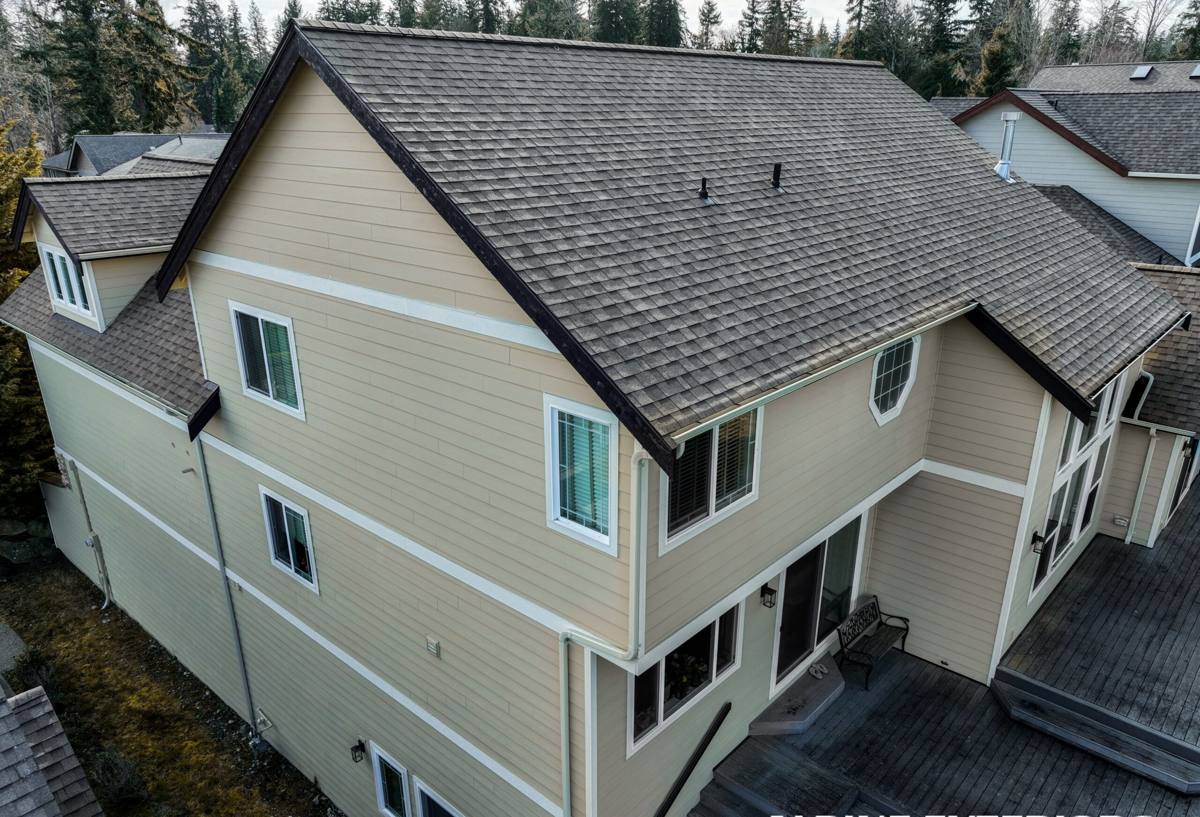
What Salt Air, Rain, and Moss Actually Do to a Deck
Salt Air and Corrosion
Airborne salt accelerates corrosion on any exposed metal — screws, joist hangers, bolts, and railing brackets. Standard electro-galvanized fasteners can start rusting within a couple of years in a marine-influenced environment like Anacortes. Once a fastener corrodes, it loses holding strength long before the surface rust is visible from above, which is part of why deck fastener choice matters more here than in most inland Washington towns.
Driving Rain and Moisture Intrusion
Anacortes weather doesn't just rain straight down — winter storms push rain at an angle, which means it gets under railings, behind ledger boards, and into any gap where flashing was skipped or done poorly. Moisture that gets trapped between decking and framing, or behind a ledger board attached to the house, is the single most common cause of hidden rot we find on older Skyline decks.
Moss and the Long Wet Season
Skagit County's extended damp season, combined with tree cover on many Skyline lots, gives moss and algae a long window to establish themselves on deck surfaces. Beyond looking bad, moss holds moisture against the board surface, keeps wood decking from drying out between rain events, and makes painted or stained surfaces dangerously slippery. Deck orientation, gaps between boards, and surrounding vegetation all affect how bad this gets — some of it can be designed around, some of it just has to be managed with regular maintenance.
Choosing the Right Decking Material for This Environment
There's no single "best" decking material for every Skyline property — it depends on budget, how much upkeep the household wants to do, and how exposed the deck is to rain and shade. Here's how the common options actually perform in this specific climate:
| Material | Moisture Behavior Here | Maintenance | Typical Lifespan |
|---|---|---|---|
| Pressure-treated fir/hem-fir | Absorbs and releases moisture readily; needs sealing to resist the wet cycle | Annual cleaning and re-sealing/staining | 15-20 years with upkeep |
| Cedar | Naturally rot- and insect-resistant, but surface still needs protection from constant damp | Regular cleaning, periodic oil or stain | 20-25 years with upkeep |
| Composite (e.g. Trex, TimberTech, Fiberon) | Doesn't absorb water into the board itself; resists rot, but can still stay damp and grow surface moss/algae | Periodic washing to keep moss and mildew off the surface | 25-30+ years, manufacturer-warrantied |
| PVC/capped composite | Fully sealed surface, best moisture resistance of the group | Lowest upkeep; still benefits from occasional washing | 25-30+ years, manufacturer-warrantied |
We don't push composite or PVC decking on every job — solid wood still has a place, especially for homeowners who want a specific look or a lower up-front cost and are willing to keep up with sealing. What we won't do is install a wood deck without being straightforward about the maintenance commitment it takes to keep it performing well in a climate this wet, or install composite decking without the ventilation and fastening details that keep moisture from getting trapped underneath it.
A Note on Cheaper Composite Products
Not all composite decking is built the same way. Lower-tier composite products with less UV and moisture protection in the cap layer can fade, stain, or degrade faster in a damp, shaded climate than their higher-grade counterparts — that's a manufacturing and formulation difference, not a knock on composite decking as a category. We steer customers toward products with a track record in wet Pacific Northwest conditions and a warranty structure that reflects real confidence in the product.
Framing and Structure: What's Under the Boards Matters Most
The decking surface is what everyone sees, but the framing underneath is what determines whether the deck is still safe and level in fifteen years. In a climate like Skyline's, we pay particular attention to:
- Ledger board attachment and flashing — where the deck ties into the house is the single most common source of hidden water damage if flashed incorrectly.
- Joist protection — capping or wrapping joists so rain doesn't sit on top of exposed cut lumber, which is where rot typically starts.
- Post base connections — keeping posts off direct ground/concrete contact with proper standoff hardware so they don't wick moisture.
- Airflow underneath — enough clearance and ventilation below the deck so the framing can actually dry out between storms instead of staying damp continuously.
- Footings sized for the soil — Skagit County soils vary lot to lot, and footing depth and sizing need to reflect what's actually under the specific site, not a generic assumption.
A deck that looks great on day one but skips these details is the kind we get called out to repair five or six years later, once soft framing starts to show up as bounce, squeaks, or a railing that's gone loose.
Railings, Fasteners, and Hardware for a Marine Environment
Hardware choice is where a lot of decks quietly fail in this area. We spec stainless steel or heavy hot-dip galvanized fasteners and structural hardware for Skyline projects rather than standard-grade coated screws, specifically because of the salt exposure. It costs more up front and makes almost no visible difference on installation day — the difference shows up ten years later, when the connections are still tight instead of rust-streaked and loosening.
Railings deserve the same attention. Whether a homeowner wants wood, metal, cable, or composite railing, the posts and connection points need corrosion-resistant hardware and proper flashing where they penetrate the deck surface, since a leaking railing post is one of the more common ways water gets into framing that's otherwise protected.
Our Custom Deck Process
1. On-Site Assessment and Design
We start at the property, looking at sun exposure, drainage, existing structure (for replacements), and how the household actually wants to use the space — entertaining, grilling, a quiet spot off a bedroom, side yard access, whatever it is. Custom means the layout fits the lot and the people using it, not a pre-set template.
2. Material and Hardware Selection
We walk through decking material options, railing styles, and finish choices with honest cost and maintenance tradeoffs for each, based on what actually holds up in Skagit County's climate.
3. Permitting
Most new deck construction and many significant repairs require a permit through the City of Anacortes or Skagit County, depending on the property's location. We handle this step as part of the job so the homeowner isn't left navigating it alone.
4. Demolition (Replacements Only)
For deck replacements, we remove the old structure and inspect the ledger connection and any framing that will be reused or that the new deck will tie into, flagging anything that needs to be addressed before building over it.
5. Framing and Build
Framing goes in with corrosion-resistant hardware, proper flashing at the house connection, and attention to drainage and airflow underneath — the parts that don't show but determine how long the deck lasts.
6. Decking, Railing, and Finish
Decking, railings, stairs, and any final finish (staining, sealing) go in last, with fastening details appropriate to the chosen material.
7. Walkthrough
We walk the finished deck with the homeowner, cover basic care for the specific material installed, and answer questions before calling the job done.
Permits and Code Considerations for Skyline
Deck permitting requirements depend on the deck's height, size, and attachment to the home, and on whether the property falls under City of Anacortes or unincorporated Skagit County jurisdiction. Structural requirements like footing depth, guardrail height, and stair specifications are set by the adopted building code and get checked during inspection. Skipping the permit step on a deck that requires one can create real problems later — at resale, with insurance, or if the structure was never actually inspected for the framing and footing details that keep it safe. We factor this into the project timeline from the start rather than treating it as an afterthought.
Maintenance Checklist for Skyline Homeowners
Whatever material a deck is built from, a little regular attention goes a long way in this climate. A simple seasonal routine:
- Sweep debris and standing organic matter (leaves, needles) off the deck surface regularly, especially in fall.
- Wash the surface at least once a year to remove moss, algae, and grime buildup before it gets embedded.
- Check gaps between boards and keep them clear so water can drain instead of pooling.
- Inspect railing posts and stair connections annually for looseness or corrosion at the hardware.
- For wood decking, re-seal or re-stain on the schedule the product calls for — usually every 1-3 years depending on exposure.
- Look underneath the deck occasionally for signs of moisture pooling, soft framing, or blocked airflow.
- Trim back overhanging vegetation that keeps sections of the deck shaded and damp longer than the rest.
Why Hire a Crew That Already Works in Skyline
A contractor who mainly builds decks in drier parts of the state, or who treats every job with the same generic spec sheet, isn't necessarily accounting for what salt air and a long wet season do to fasteners, framing, and finishes over time. Working regularly in Anacortes and the surrounding Skagit County area means we've seen how decks in this specific environment actually age — which details hold up and which ones fail first — and we build accordingly from the first framing member to the last screw. That local track record is worth more than a lower bid from a crew that's guessing at what this climate requires.
If you're planning a new deck or need to replace one that's showing its age, we're happy to take a look and put together a free, no-pressure estimate — just fill out the form below and we'll get in touch.