 Anacortes Roofing
 Windows Built for the Skyline Microclimate
Homes in the Skyline area sit close enough to the water that the air itself works against your windows every day. Salt-laden moisture rides in on the wind, settles on glass and metal, and starts a slow chemical process that most homeowners never notice until a window won't latch right or a frame starts to chalk and pit. Add in Skagit County's long stretch of driving rain each fall and winter, plus a moss season that keeps everything shaded and damp for months at a time, and you have a climate that is genuinely harder on windows than most of the country ever deals with. Energy-efficient windows aren't just about a lower power bill here — they're about keeping moisture, salt, and wind pressure out of a wall assembly that stays wet more often than it stays dry.
We install windows across Anacortes and the surrounding Skagit County communities, and Skyline-area homes get a specific set of recommendations because of where they sit. That means frame materials chosen for coastal exposure, glass packages sized for our heating season, and installation details that assume wind-driven rain will hit that window eventually — because out here, it will.
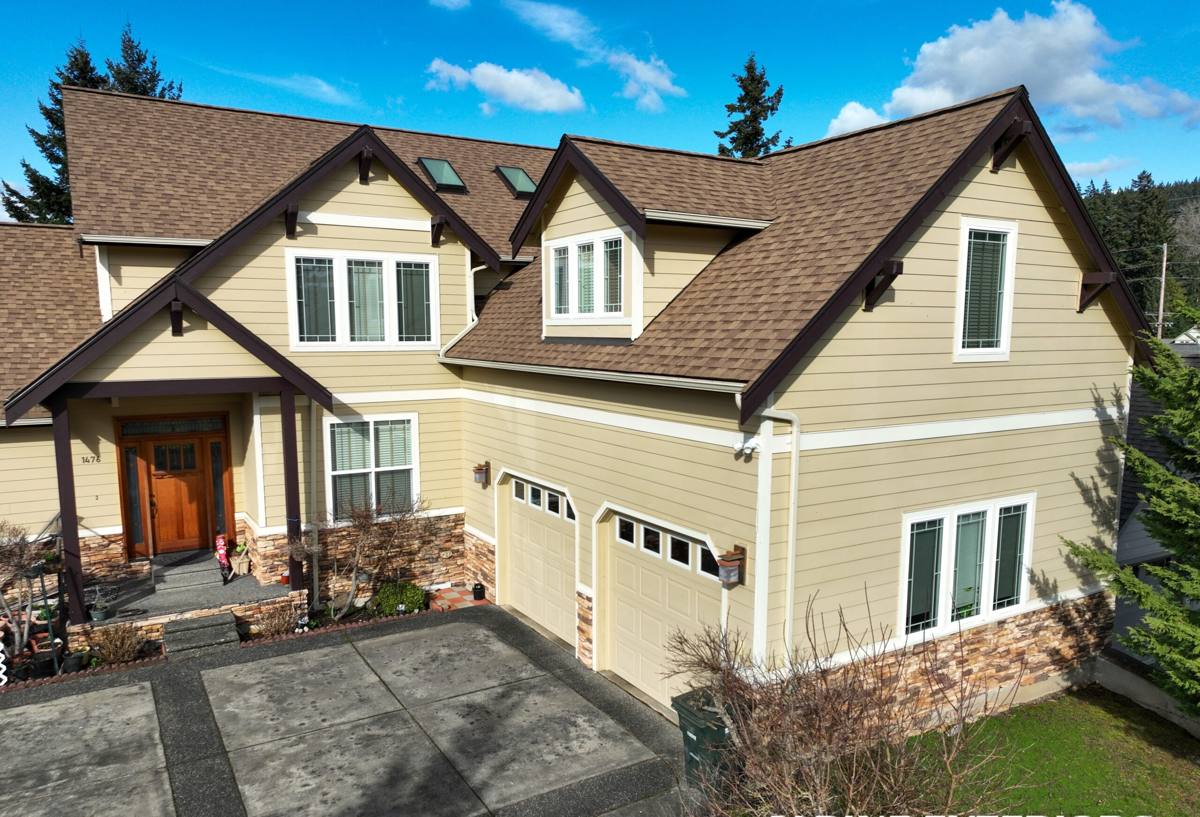
What Salt Air and Driving Rain Actually Do to a Window
It helps to understand the failure modes before you understand the fix. This isn't marketing language — it's what we see when we pull old windows out of coastal Skagit County homes.
Salt Air
Airborne salt is corrosive to bare aluminum, unsealed fasteners, and lower-grade hardware. Over years, it can pit finishes, seize balance mechanisms, and accelerate corrosion at the weep holes and drainage tracks that are supposed to keep water moving out of the frame. Vinyl and properly clad wood hold up better than unprotected metal in this environment, but the finish quality and hardware grade matter as much as the base material.
Driving Rain
Wind-driven rain doesn't just fall on glass — it gets pushed sideways and upward into any gap in flashing, sealant, or the window's own drainage system. A window that's rated for calm-weather installation but installed without proper sill pan flashing and integrated drainage will eventually let water track behind the frame and into the wall cavity, even if the glass and sash never leak a drop themselves.
Moss Season
Extended shade and dampness around a home keep humidity higher near exterior walls for longer stretches of the year. That prolonged moisture exposure is hard on sealants and glazing compounds, and it's part of why we see condensation and seal failure show up sooner on lower-quality units installed in shaded, north-facing, or tree-covered lots common around Skyline.
What a Correct Installation Actually Involves
The window unit itself is maybe half the job. The other half is everything around it — and that's where most of the long-term performance and moisture protection actually comes from.
- Removal without damage: Old units come out carefully so we can inspect the sill, jambs, and sheathing underneath before anything new goes in.
- Rot and moisture inspection: Any soft wood, prior water staining, or compromised sheathing gets addressed before the new window goes in — covering a problem never fixes it.
- Sill pan flashing: A sloped, sealed pan at the sill directs any water that does get behind the frame back outside instead of into the wall.
- Proper flashing sequence: Housewrap and flashing tape are layered shingle-style — each layer overlapping the one below — so water always sheds outward and down, never gets trapped.
- Low-expansion foam and backer rod: Used at the perimeter for insulation and air sealing without bowing the frame out of square.
- Correct shimming and fastening: The unit is set plumb, level, and square, and fastened per the manufacturer's schedule — skipping fastener locations is a common shortcut that shows up as operational problems years later.
- Interior and exterior sealant: A quality, paintable sealant finishes the job on both sides, matched to the siding and trim material it's meeting.
Frame Material: What Holds Up on the Skagit Coast
There's no single "best" window material for every home — it depends on your siding, your budget, and how exposed the elevation is. Here's how the common options actually perform in a salt-air, high-rain environment like Skyline's.
| Frame Material | Coastal Durability | Maintenance | Typical Cost Position |
|---|---|---|---|
| Vinyl (quality-grade) | Very good — won't corrode, handles moisture well | Low — occasional cleaning | Most affordable |
| Fiberglass | Excellent — very stable in temperature and moisture swings | Low | Mid to upper range |
| Clad wood | Good, if cladding and seals stay intact | Moderate — cladding needs monitoring at joints | Upper range |
| Bare aluminum | Poor in salt air unless heavily protected | High — prone to pitting and corrosion here | Varies |
For most Skyline homes we're steering people toward vinyl or fiberglass for direct coastal exposures, and reserving clad wood for homes where the look is a priority and the elevation is more sheltered. We don't push bare aluminum replacement windows in this area — it's not that the material can't work, it's that the maintenance burden to keep it performing in salt air isn't worth it for most homeowners, and we'd rather set that expectation up front than sell a product we know will need extra attention.
Glass Packages: What Actually Matters for Our Winters
Anacortes doesn't get brutal cold, but it does get long, damp, overcast winters where a home is working to hold heat for months at a stretch. Two numbers matter most:
U-Factor
This measures how well the window resists heat loss — lower is better. It's the number that most directly affects your heating bill through a Pacific Northwest winter.
Solar Heat Gain Coefficient (SHGC)
This measures how much solar heat passes through the glass. Given how many overcast days Skagit County gets, we generally don't recommend the very low-SHGC glass packages built for hot, sunny climates — you'd be blocking out solar warmth you actually want on the clear days you do get. A moderate SHGC paired with a low U-factor is usually the right balance here.
We also recommend double or triple weatherstripping and warm-edge spacer systems, which reduce condensation risk at the glass edge — a detail that matters more in a consistently humid climate than it would somewhere dry.
Our Process, Start to Finish
- On-site assessment: We look at each window's exposure, current condition, and any signs of moisture or rot before recommending anything.
- Straightforward proposal: You get a clear scope and price — no pressure, no artificial deadlines.
- Scheduling around weather: We plan installs to minimize how long any opening sits without a window in it, which matters more here than in drier climates.
- Installation with full flashing and drainage detail: As described above — no shortcuts on the parts you can't see once it's finished.
- Cleanup and walkthrough: We show you how each unit operates and locks, and answer questions on the spot.
- Warranty documentation: You get manufacturer warranty paperwork and a clear understanding of what's covered.
Signs Your Skyline Home's Windows Need Attention
- Fogging or a permanent haze between panes — the seal has failed and the insulating gas is gone
- Visible pitting, chalking, or corrosion on metal frames or hardware
- Drafts you can feel around the frame even when the window is latched
- Difficulty opening, closing, or locking — often a sign of frame movement or corroded hardware
- Soft trim or paint bubbling at the sill, which can point to water getting behind the frame
- Visible moss or persistent dampness on the exterior trim around the window
- A noticeable jump in heating costs without another clear cause
Any one of these on its own isn't an emergency, but a few together usually mean the window and its flashing are past the point where repair makes more sense than replacement.
Why a Crew That Already Works Skyline Matters
Window installation done right depends on understanding the conditions a house will face after we leave — not just the day we install it. A crew that regularly works homes around Anacortes and Skagit County already knows which elevations take the worst of the driving rain, which materials hold up against salt air over the long run, and how to sequence flashing so a shaded, moss-prone wall stays dry underneath the siding. That local pattern recognition is hard to replace with a generic installation checklist, and it's the difference between a window that looks fine at handoff and one that's still performing well a decade in.
If your Skyline-area windows are drafty, fogged, hard to operate, or just old enough that you're wondering, we're glad to take a look. Reach out for a free, no-pressure estimate using the form below — we'll walk the exterior with you, tell you honestly what we find, and lay out your options without any obligation.