 Anacortes Roofing
 Why Skyline Roofs Wear Differently
Skyline sits up on the hill above the water, which is part of what makes it a great place to live — and part of what makes roofing here its own animal. Homes at elevation catch more direct wind off Rosario Strait and the surrounding waterways than roofs tucked into lower, more sheltered parts of Anacortes. That combination of salt-laden air, near-constant driving rain through the fall and winter, and a long, damp moss season means a roof here is working harder, more often, than the same roof would be a few miles inland in Skagit County.
None of that is a reason to panic about your roof. It's a reason to make sure a replacement is done with those specific conditions in mind — the right materials, the right ventilation, and installation details that actually hold up to wind-driven moisture instead of just shedding rain on a calm day.
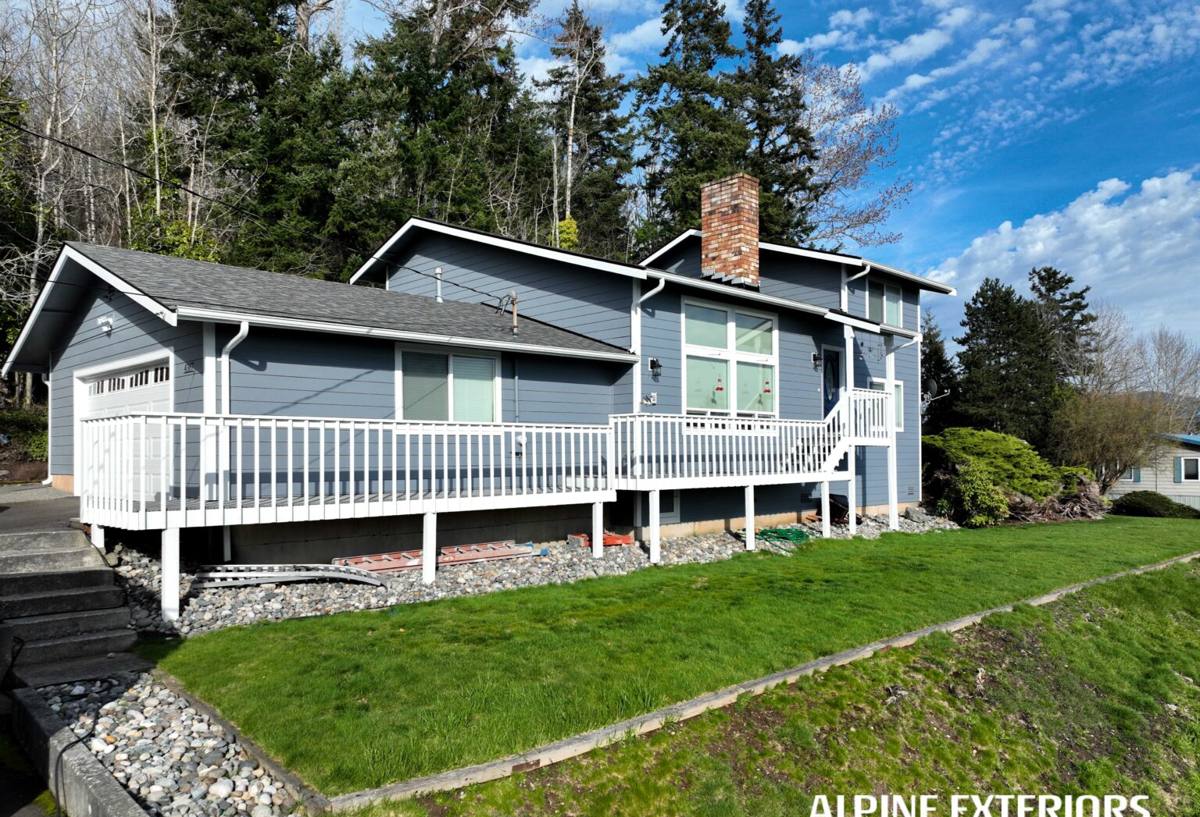
What Salt Air, Rain, and Moss Actually Do to a Roof
Each of these factors stresses a roof in a different way, and a correct replacement addresses all three, not just the one that's most visible.
Salt Air
Airborne salt accelerates corrosion on any exposed metal — flashing, fasteners, vents, and gutter hardware. Standard fasteners or thin-gauge flashing that might be fine twenty miles inland can start showing rust streaks and early failure on a Skyline roof within a few years.
Driving Rain
Wind off the water doesn't let rain fall straight down — it pushes it sideways and up under laps, edges, and penetrations. A roof that only handles vertical rain well can still leak in a Skyline storm. Underlayment coverage, fastening patterns, and flashing laps matter more here than on a calmer inland lot.
Moss
Shade, moisture, and mild temperatures make Skagit County a good environment for moss, and north-facing or tree-shaded slopes in Skyline often hold it longest. Moss isn't just cosmetic — it holds moisture against the roofing material, lifts shingle edges as it grows, and can work its way under laps over time, shortening the life of an otherwise sound roof.
Signs a Skyline Roof Needs Replacement, Not Just Repair
Not every roof problem calls for a full tear-off. But there are a handful of signs that point toward replacement being the more honest recommendation than another round of patching:
- Granule loss heavy enough that you can see bare asphalt in multiple areas, not just one worn spot
- Repeated leaks in different locations after previous repairs, rather than one isolated failure point
- Shingles that are cupping, curling, or cracking across large sections rather than a few storm-damaged pieces
- Soft or spongy decking felt underfoot during inspection, which points to moisture already in the sheathing
- Moss and moisture staining that keeps returning to the same areas even after cleaning
- A roof approaching or past the upper end of its material's realistic service life in this climate
If your roof shows one or two of these, a repair may still be the right call. If it shows several at once, a replacement is usually the more cost-effective path — chasing leaks on an aging roof tends to cost more over a few years than doing the job right once.
Material Options for a Skyline Home
There's no single "correct" roofing material for every house — it depends on the roof's pitch, the home's style, sun and shade exposure, and budget. Here's how the common options actually perform under Skyline's conditions specifically.
| Material | How It Handles Salt Air | How It Handles Moss | Typical Lifespan Here |
|---|---|---|---|
| Architectural asphalt shingles | Good, with corrosion-resistant flashing and fasteners | Needs periodic cleaning on shaded slopes | 25–30 years with proper ventilation |
| Standing seam metal | Excellent when properly coated and fastened | Sheds moss growth better due to smooth, steep-shedding surface | 40–50+ years |
| Composite/synthetic shake | Good; check manufacturer fastener specs for coastal use | Moderate; benefits from the same cleaning schedule as asphalt | 30–40 years |
| Cedar shake | Requires diligent maintenance near salt air | High maintenance burden — retains moisture, needs regular treatment | Highly maintenance-dependent |
We don't install every product on that list on every roof. Cedar shake, for example, can look great, but it demands a maintenance commitment that most homeowners don't want to sign up for once they understand what regular treatment and moss control actually involves in this climate. We'd rather walk you through that trade-off honestly upfront than sell you a roof you'll be fighting with in five years.
Ventilation and Moisture Control: The Part You Don't See
A roof replacement that looks right from the street can still fail from the inside if ventilation is wrong. Proper intake at the eaves and exhaust at the ridge keeps the attic temperature and humidity close to outdoor conditions, which does two things that matter a lot in a climate like this one:
- It reduces condensation buildup inside the attic during our long stretches of cool, wet weather
- It helps prevent the kind of trapped moisture that accelerates decking rot and shortens shingle life from underneath
On a lot of older Skyline homes, we find ventilation that was adequate when the house was built but is undersized or partially blocked by insulation today. A replacement is the right time to correct that — it's far more disruptive and expensive to fix after the new roof is on.
What Correct Underlayment and Flashing Look Like Here
Given the wind-driven rain this area sees, we treat underlayment and flashing as load-bearing parts of the system, not afterthoughts.
- Ice-and-water shield at eaves, valleys, and roof penetrations, sized generously beyond the code minimum for wind-driven exposure
- Synthetic underlayment across the full roof deck for consistent secondary water protection, properly lapped against the prevailing wind and weather direction for this site
- Corrosion-resistant flashing and fasteners at chimneys, skylights, and wall intersections to hold up to salt air over the long term
- Properly lapped and sealed valleys, since valleys concentrate more water volume than any other part of the roof
Our Roof Replacement Process
The steps themselves aren't unusual — what matters is doing each one with Skyline's conditions in mind rather than treating every roof the same.
- On-site inspection and assessment. We look at the existing roof, decking condition, current ventilation, and any moss or moisture patterns specific to your home's exposure and shade.
- Written scope and material recommendation. You get a clear explanation of what's being replaced, what materials we recommend and why, and a straightforward cost range — no surprise add-ons discovered mid-job that weren't discussed upfront.
- Tear-off and decking check. We remove the old roofing and inspect the decking underneath, since this is the only point in the process where hidden rot or soft spots are actually visible.
- Underlayment, flashing, and ventilation correction. This is where a roof's real weather resistance gets built, well before the finish material goes down.
- Installation of the new roofing material, following manufacturer specifications for fastening patterns suited to coastal wind exposure.
- Final walkthrough and cleanup. We review the completed work with you and make sure the site is left clean, including magnetic sweep for stray fasteners.
Cost Factors for a Skyline Roof Replacement
Every roof is priced individually based on size, pitch, material, and current condition, but these are the factors that most often move the number up or down:
| Factor | How It Affects Cost |
|---|---|
| Roof size and number of planes | More square footage and complexity mean more material and labor |
| Pitch and accessibility | Steep or hard-to-access roofs require more safety setup and time |
| Decking condition | Rotted sheathing found at tear-off adds material and labor to replace it |
| Material choice | Asphalt, metal, and composite options carry different upfront costs and lifespans |
| Ventilation corrections | Adding or upgrading intake/exhaust vents adds modest cost but pays off in roof longevity |
| Number of penetrations | Chimneys, skylights, and vents each require careful flashing work |
What to Look For in a Roofing Contractor for This Area
Plenty of contractors will replace a roof. Fewer of them think specifically about wind-driven rain off the water, salt exposure on fasteners, and moss patterns tied to shade and elevation — the things that actually determine how a Skyline roof holds up over time. Before hiring anyone for a roof replacement in this neighborhood, it's worth checking for:
- Current Washington state contractor licensing and active liability insurance
- A written estimate that spells out materials, underlayment type, and ventilation plan — not just a total price
- Familiarity with coastal fastener and flashing requirements, not just standard inland specs
- A clear explanation of why a particular material is or isn't recommended for your specific roof
- Local references or work you can actually see in the area, not just photos from elsewhere
A crew that already works in Skyline and the surrounding Anacortes neighborhoods has usually already learned these lessons on other roofs nearby — which means fewer surprises on yours.
Why Local Experience on This Specific Hill Matters
Skagit County covers a lot of ground, and roofing needs vary block to block depending on tree cover, elevation, and exposure to the water. A contractor who regularly works Skyline specifically has already seen how its wind exposure, shade patterns, and moss growth behave across different homes in the neighborhood — which means the material recommendation, ventilation plan, and flashing details are based on what actually happens here, not a generic checklist written for a different climate.
If your roof is showing its age, or you just want a straight answer about whether repair or replacement makes more sense for your home, we're happy to take a look and walk you through it. Reach out for a free, no-pressure estimate using the form below.