 Anacortes Roofing
 Storm Damage Roof Repair for Skyline Homes
Skyline sits on the water side of Fidalgo Island, which means it catches weather that inland Anacortes neighborhoods often don't feel as hard. Wind off the water, salt-laden air, and long stretches of wet weather put real, repeated stress on a roof here. When a storm rolls through Skagit County, homes in this part of Anacortes are usually first in line for wind-lifted shingles, torn flashing, and water finding its way in somewhere it shouldn't.
This page is about one thing: doing storm damage roof repair correctly for Skyline homes, given the specific conditions this neighborhood deals with. Not a generic patch job, and not a sales pitch for a full replacement you don't need. Just an honest look at what storm damage looks like out here, what a correct repair involves, and why local experience actually changes the outcome.
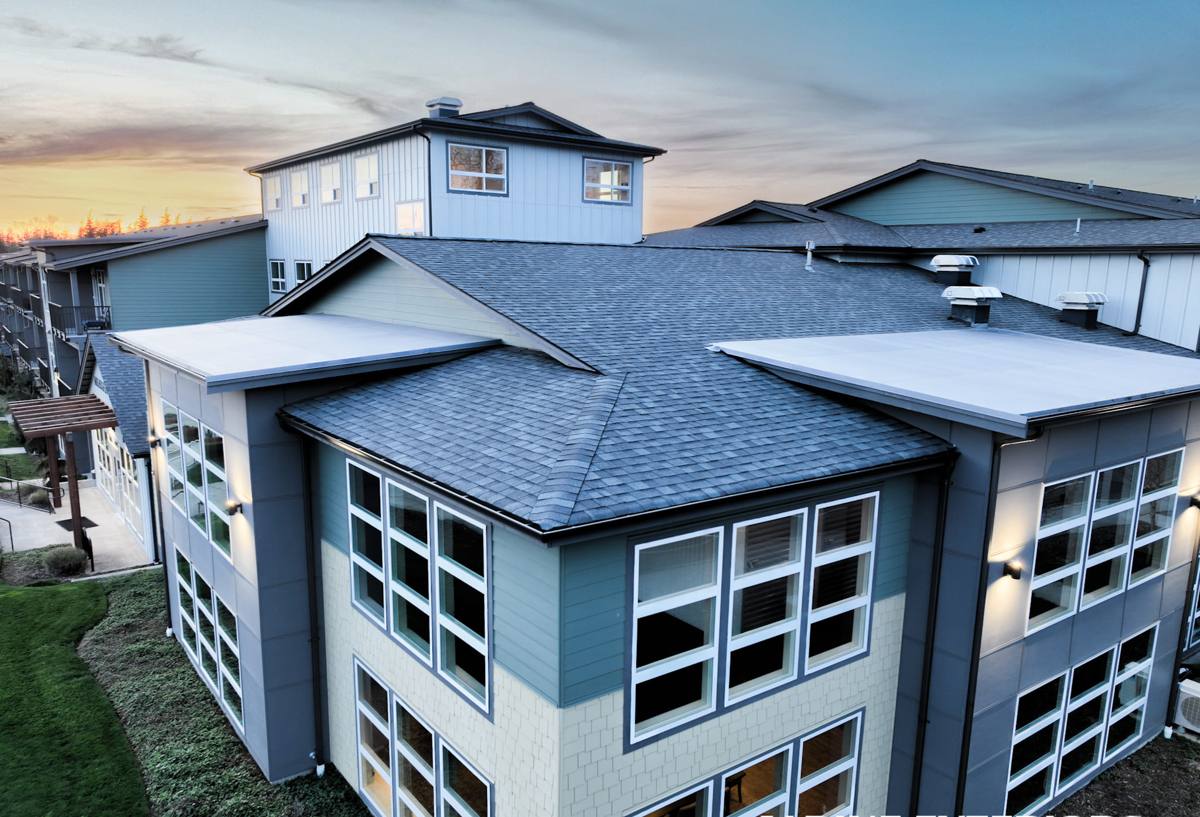
What Anacortes Storms Actually Do to a Skyline Roof
Storm damage isn't always a dramatic hole in the roof. More often it's a handful of smaller failures that compound over a wet Pacific Northwest winter. In Skyline, four factors show up again and again.
Wind and Uplift
Wind off the water doesn't hit a roof evenly. It gets under the leading edge of shingles, especially at ridges, rakes, and any spot where sealant has aged or fastening was marginal to begin with. Once wind gets under one shingle, it works on the next one, and a single gusty night can loosen a section that looked fine the week before.
Wind-Driven Rain and Flashing Failures
Straight-down rain is easy for a roof to shed. Rain that's being pushed sideways by wind is a different problem — it finds its way under shingle laps, around chimney and skylight flashing, and into any gap that wouldn't normally see water. Most of the "mystery leaks" we get called out for in Skyline trace back to flashing that was fine in a light rain but failed under wind-driven conditions.
Salt Air and Corrosion
Being closer to the water means more salt in the air, and salt is hard on metal. Fasteners, flashing, and gutter hardware corrode faster here than they do further inland. A nail that's rusted and weakened doesn't hold a shingle down as well, and that's exactly the kind of small failure that turns a windstorm into a repair call.
Moss, Debris, and Trapped Moisture
Skagit County's moss season is long, and shaded or north-facing roof sections in Skyline grow it readily. Moss holds moisture against the roofing material far longer than open air ever would, and it lifts shingle edges as it grows. A roof that's already carrying a moss load is more vulnerable when a storm hits — the shingles are less securely seated and the deck underneath may already be dealing with extra moisture.
Signs Your Skyline Roof Has Storm Damage
Some storm damage is obvious. A lot of it isn't, especially from the ground. After any significant wind or rain event, it's worth checking for the following:
- Shingles that look lifted, curled, or out of alignment compared to the rest of the roof
- Granules collecting in gutters or at downspout outlets — a sign of shingle wear or impact damage
- Visible gaps or bent sections at flashing around chimneys, vents, or skylights
- Water stains on interior ceilings or upper walls, even faint ones
- Missing or displaced ridge cap pieces
- Debris — branches, moss clumps, torn material — caught on the roof or in gutters after a storm
- Soft or spongy-feeling spots if you're able to safely check the attic decking
- Daylight visible through the roof deck from inside the attic
Any one of these is worth a look. Several together usually means the roof took a real hit and a proper inspection is overdue, not optional.
What a Correct Storm Damage Repair Actually Involves
A rushed storm repair — a few shingles swapped, some sealant smeared on a flashing joint — can hide a problem instead of fixing it. Done right, storm damage repair starts with figuring out the actual extent of the damage, not just the part that's visible from the driveway.
Inspection First
We check the obvious damage, but also the areas storms typically expose next: flashing seams, valleys, ridge lines, and any spot where two roof planes or a roof and a wall meet. In a coastal-influenced area like Skyline, we're also checking fastener condition, since salt-accelerated corrosion isn't always visible until you look closely.
Repair vs. Replace, Honestly
Most storm damage is repairable without a full roof replacement — that's the reality most of the time, and we'll tell you that plainly if it's true. But if the roof was already near the end of its service life, or the damage is spread across a large enough area that patch repairs would just be the first of several visits, we'll say that too. The goal is a roof that holds up through the next storm, not a repair that gets you through this one.
Materials and Repair Methods for This Climate
Not every repair approach holds up equally well in a salt-air, high-moisture environment. Here's how the common options compare for Skyline conditions specifically.
| Repair Element | Standard Approach | What Matters in Skyline's Conditions |
|---|---|---|
| Fasteners | Standard galvanized nails | Corrosion-resistant fasteners last longer against salt air exposure near the water |
| Flashing | Reused or spot-sealed existing flashing | Replacing compromised flashing outright avoids repeat leaks from wind-driven rain |
| Shingle Matching | Closest available match | Exact or near-exact match keeps wind resistance and appearance consistent across the repaired section |
| Moss-Affected Areas | Patch over existing moss growth | Cleaning and treating moss before repair prevents trapped moisture under new material |
| Sealant Use | Sealant as the primary fix | Mechanical fastening and proper flashing detail, not sealant alone, hold up through repeat storms |
None of this is about upselling premium materials for their own sake. It's about matching the repair method to conditions that are genuinely tougher on a roof here than in a sheltered inland neighborhood.
Our Storm Damage Repair Process
- Inspection and documentation. We walk the roof, photograph the damage, and note anything that could affect an insurance claim.
- Straightforward assessment. We tell you what's damaged, what's causing it, and what it will take to fix — before any work starts.
- Temporary protection if needed. If there's active leaking or exposed decking, we get it covered and protected right away rather than waiting for a full repair schedule.
- Repair work. Shingle replacement, flashing repair or replacement, and deck repair where water has gotten through, done to match the existing roof.
- Final check. We confirm the repair is sealed and secure, and walk you through what was done.
Storm Damage and Insurance Claims
Wind and storm damage is often covered under homeowner's insurance, but coverage details and claim requirements vary by policy. We're not adjusters and we don't handle your claim for you, but we can provide clear photo documentation and a written description of the damage that you can hand directly to your insurer. Having that documentation from the start tends to make the claims process go smoother than trying to reconstruct what happened after the fact.
Why a Crew That Already Works Skyline Matters
A roofer who mostly works inland neighborhoods doesn't necessarily think about salt-air corrosion on fasteners, or how exposed a particular roof plane is to wind coming off the water. Working regularly in Skyline means we already know what tends to fail here and why — which flashing details are worth doing right the first time, which roof orientations take the worst of the wind, and how long moss actually takes to become a real problem in this microclimate versus further inland in Skagit County.
That local pattern recognition matters most right after a storm, when the priority is figuring out quickly and accurately what actually needs fixing versus what's just cosmetic.
Reducing the Next Storm's Impact
You can't storm-proof a roof, but you can reduce how much damage the next one does:
- Keep gutters and downspouts clear so wind-driven rain has somewhere to go
- Address moss growth before it spreads across shaded roof sections
- Have flashing and fastener condition checked periodically, not just after visible damage shows up
- Trim back branches that could come down on the roof in high wind
- Get small issues fixed promptly — a loose shingle today is a bigger leak after the next windstorm
Anacortes weather isn't going to get gentler, and Skyline's exposure to wind and salt air isn't going away. Routine attention costs a lot less than repeated storm repairs.
Get a Straightforward Estimate
If your Skyline home has recent storm damage, or you just want a roof checked out after a rough stretch of weather, we're glad to take a look. There's no pressure and no obligation — just an honest read on what your roof needs. Use the form below to request a free estimate.