 Anacortes Roofing
 Storm Damage Roofing Built for Conway's Corner of the Skagit Valley
Conway sits down in the flat, low delta country of Skagit County, out where farmland and river-bottom land open up and the trees thin out. That matters for roofs. In wooded parts of Anacortes, mature trees break up the wind before it ever reaches a roofline. Out around Conway, storms coming off the water have a much straighter shot, and wind-driven rain gets pushed sideways across open fields instead of falling straight down. That's a different set of stresses than a roof fifteen minutes away in town might see, and it's part of why storm damage repair for this area isn't a one-size-fits-all job.
Add in the rest of what Skagit County weather does to a roof year-round — salt air drifting in off the Sound, a rainy season that runs long, and a moss season that runs longer — and you end up with roofs that take damage in specific, predictable ways. Knowing those patterns is most of what separates a repair that holds up from one that fails again at the next storm.
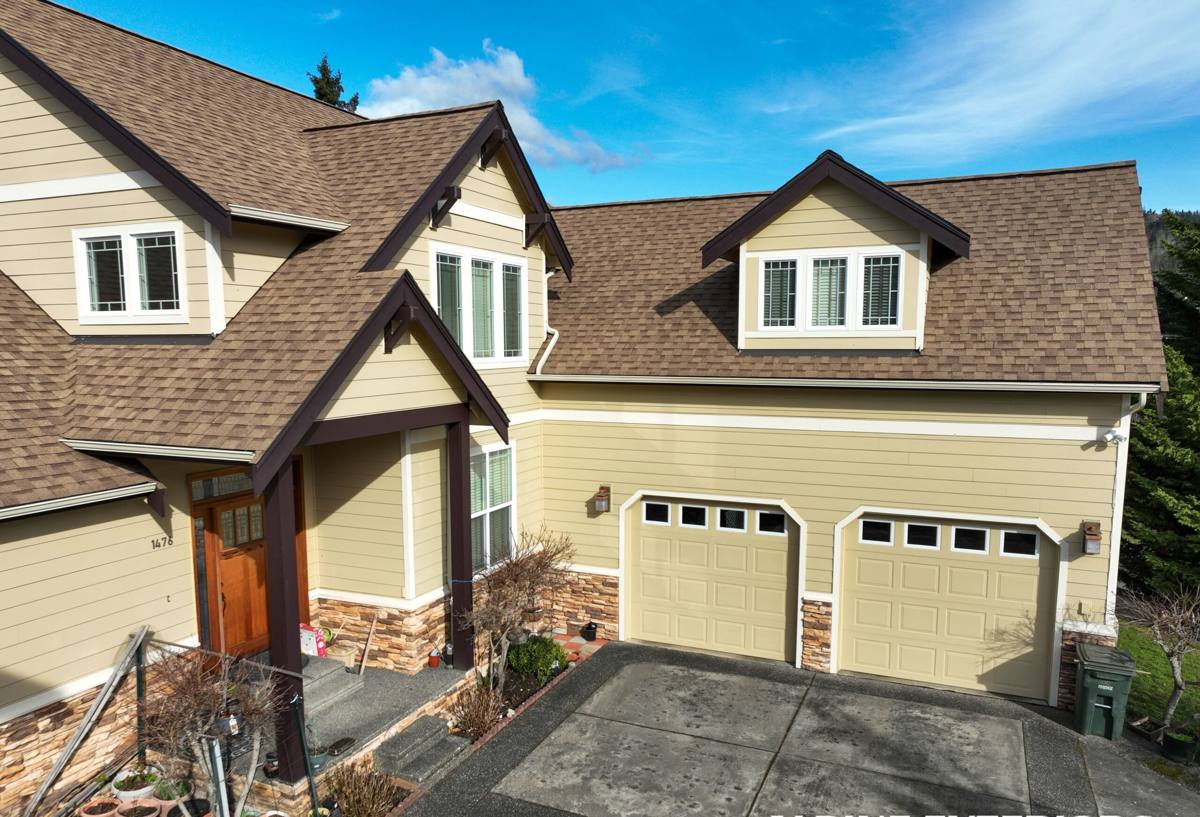
What Storm Damage Actually Looks Like on a Roof
Storm damage isn't always a dramatic hole in the roof. More often it's smaller and easier to miss from the ground, which is exactly why it tends to turn into a bigger problem if it sits too long.
Wind Damage
Gusts can lift shingle tabs, crease them, or tear them off outright, especially along ridges, edges, and any spot where the roof has already been weakened by age or old moss growth. Lifted shingles don't always blow away completely — sometimes they just lose their seal and start letting water underneath on the next rain.
Wind-Driven Rain and Water Intrusion
Rain that's moving sideways instead of falling straight down can get pushed up under shingle edges, around chimney and vent flashing, and into any gap that would normally shed water fine in calm weather. This is one of the most common ways storm damage shows up as a ceiling stain days or weeks after the storm has passed.
Impact and Debris Damage
Branches, blown debris, and hail can bruise or puncture shingles, crack ridge caps, or dent metal flashing and gutters. Some of this damage is obvious. Some of it — like a bruised shingle that hasn't torn yet — only shows up as a leak months later.
Moss and Long-Term Moisture Damage
This region's long moss season doesn't cause storm damage on its own, but it sets the stage for it. Moss holds moisture against the roof surface, works its way under shingle edges, and lifts them slightly over time. A roof with established moss growth is more vulnerable to wind and rain damage than a clean one, simply because the shingles are already being held up off the deck instead of laying flat.
Why Waiting Makes It Worse
A damaged roof rarely stays a roof-only problem for long. Water that gets past shingles and underlayment reaches the roof deck first, then insulation, then framing and interior finishes. In a wet climate like ours, that timeline moves faster than most homeowners expect — wet sheathing can start to soften and mold can start to grow within days, not weeks. A repair that would have been straightforward right after the storm can turn into a deck replacement or interior repair if it's left alone through a few more rounds of rain.
That's the practical case for getting storm damage looked at promptly: not because every ding needs same-day attention, but because the cost of a small repair almost never grows, while the cost of water damage almost always does.
Our Storm Damage Repair Process
Inspection
We start by getting on the roof (not just looking from the ground) to check the areas most likely to have taken damage — ridges, edges, valleys, flashing points, and anywhere moss or debris has been sitting. We also check the attic side when we can, since water stains and damp insulation often show up there before they show up on a ceiling.
Documentation
We take clear photos of what we find and put together a written scope of the damage. If you're filing an insurance claim, this documentation is what your adjuster will want to see, and having it organized before that conversation tends to make the claims process go smoother.
Repair
We replace or reseal damaged shingles, repair or replace compromised flashing, and address the underlayment if water has reached it. We match materials as closely as possible to what's already on the roof so the repair blends in and performs the same as the surrounding field.
Cleanup and Final Check
We clear debris, check gutters and downspouts for anything the storm knocked loose, and do a final walk of the repair area before we consider the job done.
Repair or Replace?
Not every storm-damaged roof needs a full replacement, and we don't push one when a repair will genuinely hold. The honest answer usually comes down to how much of the roof's remaining life the storm used up.
| Consideration | Repair Is Usually Right | Replacement Is Usually Right |
|---|---|---|
| Roof age | Under roughly half its expected lifespan | Already near or past its expected lifespan |
| Extent of damage | Isolated to a section, slope, or a few penetrations | Spread across multiple slopes or the whole roof |
| Underlying condition | Deck and underlayment are sound elsewhere | Widespread moss lift, prior repairs, or soft decking found |
| Shingle match | Discontinued or badly weathered shingles still available or close enough to match | Existing shingles too faded or discontinued to blend a repair |
| Insurance scope | Adjuster scopes it as a repair-level claim | Adjuster scopes it as full-slope or full-roof |
We'll give you our honest read on where your roof falls before any work starts, including if that means telling you a repair is the right call even when a replacement would be the bigger job for us.
Materials That Hold Up to This Climate
What goes into a storm repair matters as much as the labor. For Conway's mix of salt air, sustained rain, and wind exposure, our standard is:
- Corrosion-resistant fasteners. Standard fasteners can corrode faster in salt-air environments, so we use fasteners rated to hold up to it, especially on flashing and edge metal.
- Properly lapped, sealed flashing at chimneys, vents, and valleys — the points that fail first under wind-driven rain.
- Ice-and-water shield in vulnerable spots like valleys and eaves, which gives an extra layer of protection where wind-driven water is most likely to get pushed uphill under shingles.
- Shingles matched to the existing roof from major manufacturers like GAF, Owens Corning, or CertainTeed, chosen for wind rating and warranty fit rather than lowest cost.
We're upfront that some lower-cost repair shortcuts — skipping flashing replacement, reusing old fasteners, gluing down shingles instead of properly reflashing — save money today but tend to fail again at the next storm. Our standard is built around what holds up here, not just what patches the visible problem.
Insurance Considerations
Most storm damage claims move faster and go smoother when the damage is documented promptly and by someone who knows what an adjuster is looking for. A few things worth knowing:
- Most homeowner policies cover sudden storm damage (wind, hail, falling debris) but not gradual damage from long-term neglect or moss — which is one more reason not to let a small storm-related issue sit.
- Getting an inspection and written estimate soon after a storm gives you documentation that supports your claim, whether or not you end up filing.
- You're not obligated to use any contractor your insurance company suggests. You have the right to choose who does the work.
We're happy to walk through what we find and provide documentation you can use for a claim, without pressuring you toward filing one if the damage doesn't warrant it.
Preventing the Next Storm From Doing the Same Damage
A lot of repeat storm damage traces back to maintenance that got skipped, not bad luck. A few things worth checking on your own between storms:
- Clear moss and debris from valleys and roof edges before it has a chance to hold moisture against the shingles
- Keep gutters and downspouts clear so wind-driven rain has somewhere to go instead of backing up under the roof edge
- Trim back branches that hang over or near the roof, since these are common sources of impact damage in wind
- Have flashing around chimneys, vents, and skylights checked periodically — these are the points most likely to fail first
- Get a roof inspection after any major windstorm, even if nothing looks obviously wrong from the ground
Why a Crew That Already Works Conway Matters
Storm damage repair goes better when the crew showing up already understands the conditions your roof is dealing with — not generic "coastal Washington" conditions, but the specific mix of open wind exposure, salt air, and a long wet season that this part of Skagit County sees. That's the difference between a repair that's built to last through the next storm and one that's just a quick patch.
Working locally out of Anacortes also means we're not a traveling storm-chase outfit that shows up after a big weather event, does a fast job, and is gone by the time a problem resurfaces. We're here for the follow-up, the warranty, and the next storm after this one.
If your Conway home has storm damage — or you're not sure whether what you're seeing is storm damage or just wear — we're glad to take a look. Fill out the form below for a free, no-pressure estimate.