 Anacortes Roofing
 Window Installation for Edison Homes, Not a Generic Job
Edison sits in the low-lying farmland along Samish Bay, close enough to the water that salt air is part of daily life and far enough from town that a lot of homes are older, wood-framed, and due for an honest look at their windows. Window installation here isn't the same job as a subdivision house twenty miles inland. Between the salt-laden air coming off the bay, wind-driven rain in the winter storm months, and a moss season that seems to run longer every year, windows in this part of Skagit County take a beating that most manufacturers' warranty language never really accounts for. We install windows for homes in and around Edison because we already understand what this specific stretch of coastline and farmland does to a building envelope.
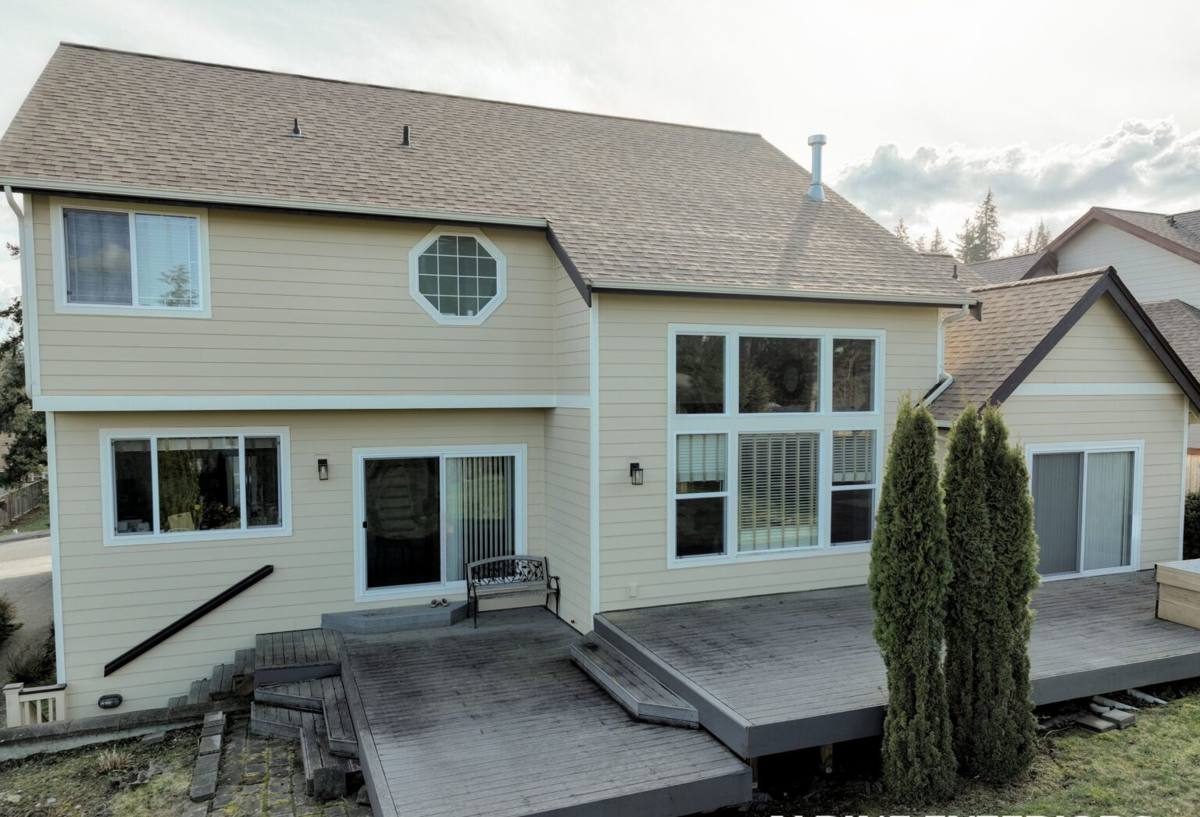
What Edison's Climate Actually Does to Windows
Three things drive most of the window problems we see out here, and they compound each other.
Salt Air and Corrosion
Homes near Samish Bay get a steady dose of salt-laden air, and that air is hard on anything metal — window hardware, weep hole screens, aluminum-clad frames, and even the fasteners behind the trim. Corrosion doesn't announce itself; it shows up years later as a lock that won't turn smoothly, a hinge that seizes, or a frame that's pitted where the finish has worn through.
Driving, Wind-Driven Rain
Storms coming off the water push rain sideways, not straight down. A window that would be fine in a sheltered inland yard can leak in Edison if the flashing detail, sill pan, or sealant bead wasn't built to handle rain hitting the glass and frame at an angle. Most water intrusion problems we find aren't the window unit failing — they're the installation detail around it that was never built for this kind of weather.
Moss, Mildew, and Trapped Moisture
Skagit County's moss season runs long, and it's not just a roof problem. Moss and mildew take hold on north-facing trim, in window sills that don't drain properly, and in the gap between an old frame and the rough opening if it was never properly sealed. Once moisture gets trapped in that space, it stays wet for months at a time, which is exactly the environment that leads to rot in the surrounding wood framing.
Signs an Edison Home Is Ready for New Windows
Not every old window needs replacing, but a few signs are worth taking seriously given what the local climate does to a home over time.
- Visible condensation or fogging between the panes of a double-pane window — the seal has failed and the insulating gas is gone
- Soft or discolored wood trim around the window, especially on walls facing the prevailing wind and rain
- Windows that are noticeably harder to open, close, or lock than they used to be
- A persistent draft or cold spot near the window frame even when it's fully closed
- Peeling paint or a chalky white residue on the exterior frame — often a sign of salt exposure combined with sun
- Moss or dark staining building up on the sill or the trim below the window
- Noticeably higher heating bills without any other explanation
What a Correct Installation Actually Involves
Swapping in a new window is the easy part. The details that determine whether it lasts fifteen years or thirty in this climate happen before the new unit ever goes into the opening.
- Remove the old unit carefully and inspect the rough opening for hidden rot, especially at the sill — this is the single most common surprise on older Edison homes
- Repair or rebuild the framing if there's any soft wood, before anything new goes back in
- Install a sloped sill pan so any water that gets past the window drains back outside instead of sitting against the frame
- Flash the opening properly, layering the water-resistive barrier and flashing tape so water is shed downward and outward, shingle-style, at every layer
- Set the window level, plumb, and square, shimmed correctly so the frame isn't stressed and the sash operates smoothly for years
- Seal and insulate the gap between the frame and the rough opening with the right combination of low-expansion foam and sealant — not just caulk smeared around the outside
- Finish the exterior trim and flashing so the whole assembly sheds wind-driven rain rather than collecting it
Skip or rush any one of those steps and the window itself almost doesn't matter — water will find its way into the wall assembly eventually, and in this climate "eventually" tends to arrive sooner than homeowners expect.
Choosing a Frame Material for This Climate
There's no single "best" window material for every home — it depends on the home's age, style, and how exposed it is to wind and salt air. Here's how the common options actually perform out here.
| Frame Material | Salt Air / Corrosion | Maintenance | Best Fit |
|---|---|---|---|
| Vinyl | Doesn't corrode; hardware is the main wear point | Low — occasional cleaning | Most homes; strong value in this climate |
| Fiberglass | Very stable, resists warping and corrosion | Low | Homes with heavy sun and temperature swings, or where a slimmer profile matters |
| Wood (unclad) | Handsome but needs protection from moisture and salt | High — repainting, sealing | Historic or period-style homes where appearance is a priority |
| Aluminum-clad wood | Cladding protects wood, but cladding fasteners and seams can corrode near the bay | Moderate | Homes wanting a wood interior look with less exterior upkeep |
For most Edison properties we talk to homeowners about vinyl or fiberglass first, simply because they hold up with the least fuss in salty, wet air. Where a home's character calls for a wood look, we'll talk through the added maintenance honestly rather than talk anyone out of it.
Glass and Coating Options Worth Discussing
Beyond the frame, the glass package matters just as much for comfort and condensation control:
- Double-pane vs. triple-pane — triple-pane adds insulating value and can help with road or farm-equipment noise, at added cost and weight
- Low-E coatings — reduce heat loss in winter and glare in summer without noticeably changing the view
- Argon or krypton gas fill — improves insulation between panes; argon is standard, krypton is used in narrower gaps
- Warm-edge spacers — reduce condensation right at the edge of the glass, which matters in a cool, damp climate
Our Process, Start to Finish
We keep this straightforward because window installation shouldn't feel like a mystery.
- Free on-site estimate — we look at the actual openings, check for existing moisture damage, and talk through what your home needs
- Straightforward proposal — clear pricing on the windows, materials, and labor, with no vague allowances
- Scheduling around weather — we plan installs to minimize how long any opening sits open to Edison's wind and rain
- Careful removal and framing check — any hidden rot gets flagged and discussed before we move forward
- Installation to the standard above — sill pan, flashing, proper shimming, and sealing done in the right order
- Cleanup and walkthrough — we walk the finished windows with you and make sure everything opens, closes, and locks the way it should
Why a Crew That Already Works Edison Matters
Edison is a small, spread-out community, and it doesn't get the same steady stream of contractor traffic that a denser part of Skagit County does. A crew that's already familiar with the area knows what unincorporated Skagit County permitting looks like, understands how exposed a given lot is based on its distance from the bay, and isn't guessing at how the local weather behaves through the fall and winter. That familiarity shows up in small ways — knowing to check for rot in the sill before quoting a price, knowing which flashing details actually hold up here, and being realistic about scheduling around the rainy months instead of promising an install date that weather won't allow.
It also matters for follow-up. If a seal needs a second look after the first hard storm of the season, a local crew can get back out to Edison without it being a special trip.
Protecting the Investment After Installation
New windows installed correctly should need very little from you, but a few habits extend their life in this climate:
- Rinse salt residue off exterior frames and glass a few times a year, especially after windy weather off the bay
- Keep gutters and downspouts clear so runoff isn't sheeting directly across window heads
- Clear moss or debris from sills and trim before it holds moisture against the frame
- Check exterior caulk lines annually and have any cracked or shrunken sealant redone before winter
- Operate locks and hardware periodically even on windows you don't open often, so moving parts don't seize
If you're weighing whether it's time to replace windows on an Edison property, or you just want a straight answer on what a correct installation involves for your home, we're happy to come take a look. The estimate is free, there's no pressure, and you'll get a clear answer either way — use the form below to get started.