 Anacortes Roofing
 Why Decks in Old Town Anacortes Take More Punishment Than You'd Expect
Old Town Anacortes sits close to the waterfront, and that proximity to Guemes Channel and the open water of Puget Sound shapes everything about how a deck ages here. Salt-laden air moves through the neighborhood daily, settling on hardware, fasteners, and any exposed metal. Add Skagit County's driving rain — the kind that comes in sideways during winter storms — and you've got a structure that's wet far more often than it's dry. Mature trees throughout the older parts of Anacortes keep decks shaded through much of the year, which sounds pleasant until you realize shade plus moisture equals moss. Around here, moss season isn't a few weeks in spring; it's most of the year, and it doesn't just grow on roofs. It finds its way into deck board gaps, railings, and stair treads, turning walking surfaces slick and holding moisture against wood long after a storm has passed.
None of this means a deck can't hold up in Old Town Anacortes. It means the deck has to be built with these specific conditions in mind from the framing up, not just finished with a coat of stain and hoped for the best.
What a Deck Built for This Neighborhood Actually Needs
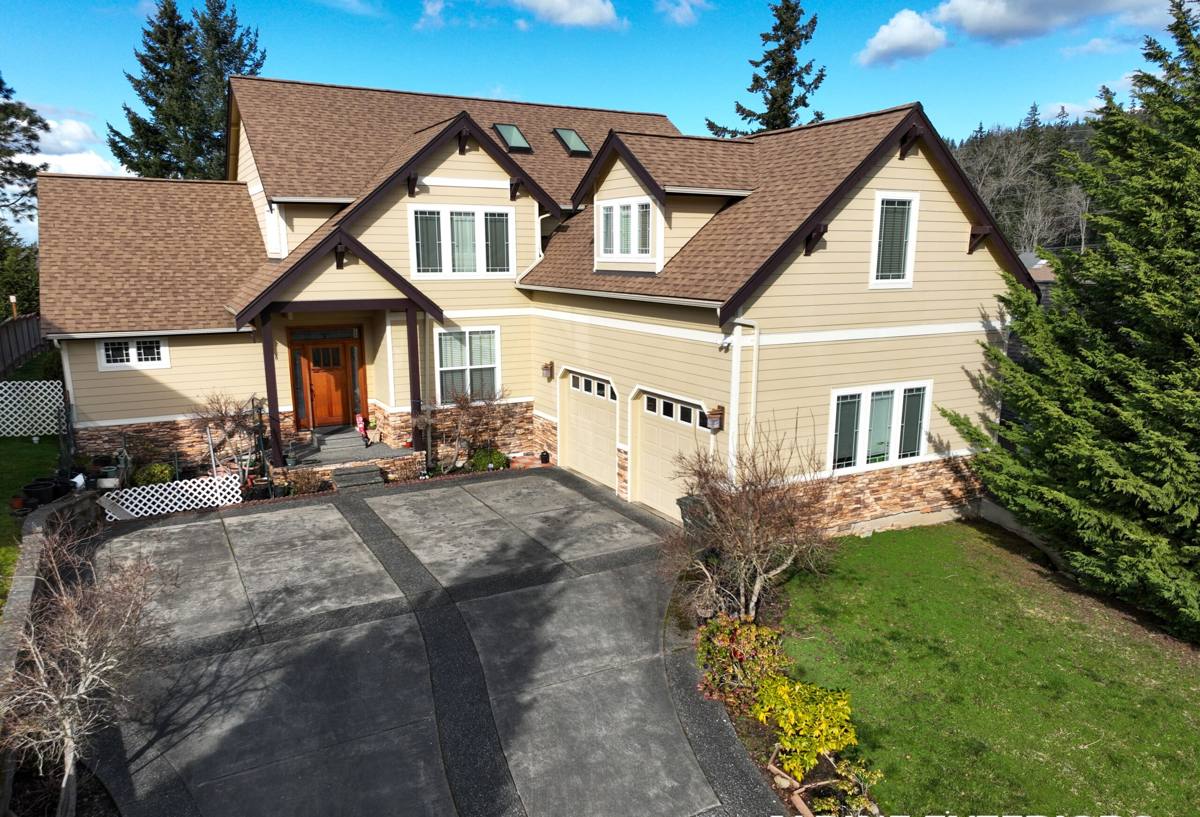
Old Town is one of Anacortes's original residential areas, and the homes reflect that — a mix of early-1900s houses and later infill construction, often on narrower lots than you'll find in newer subdivisions. That history matters when it's time to attach a deck to the house.
Matching an Older Home's Character
Homeowners here generally want a deck that looks like it belongs with the house, not a modern composite platform bolted onto a century-old cottage. That's a legitimate design goal, and it's one we can usually meet with railing profiles, post detailing, and decking color choices, even when the structural guts of the deck use current materials and fastening methods that are a big step up from what was standard decades ago.
Working With What's Already There
Older homes sometimes have rim joists, siding, or foundations that weren't built with a modern deck ledger attachment in mind. Stud spacing can be inconsistent, and previous additions or repairs aren't always documented. Before we finalize a design, we look at what the house is actually giving us to attach to — not just what a set of standard plans assumes — so the connection between deck and house is solid on day one.
Choosing the Right Decking Material for Salt Air and Moss
There's no single "best" decking material for every home — it depends on budget, how much upkeep you want to do, and how the deck sits relative to sun, shade, and water exposure. Here's an honest comparison of the main options we work with:
| Material | Upfront Cost | Maintenance | How It Handles Salt Air & Moss |
|---|---|---|---|
| Pressure-treated fir/hem-fir | Lowest | Regular cleaning and re-sealing every 1-2 years | Holds up structurally but needs consistent upkeep to resist moss staining and surface checking |
| Cedar | Mid-range | Annual cleaning, periodic oiling to maintain color | Naturally rot-resistant and handles moisture well, but softer surface can hold moss if not cleaned |
| Capped composite | Higher | Occasional washing, no staining or sealing | Doesn't absorb moisture like wood, resists moss staining, best long-term option in shaded, damp spots |
| PVC decking | Highest | Minimal — occasional washing | Fully moisture-resistant, though can feel less "natural" against an older home's look |
For a lot of Old Town properties, especially the shaded, tree-covered lots common in the older part of the neighborhood, capped composite ends up being the practical middle ground — it costs more up front than treated lumber but doesn't demand the same fight against moss and staining every year. That said, plenty of homeowners still choose cedar for the look, and we'll be straight with you about the tradeoff in maintenance time either way.
The Framing and Substructure Most Homeowners Never See
The decking boards get all the attention, but the framing underneath is what actually determines whether a deck is safe and long-lasting. Joists, beams, posts, and footings take the structural load and the moisture exposure, and in a climate like ours, that substructure is doing hard work year-round.
We frame with appropriately rated pressure-treated lumber sized for the actual load and span, not just whatever's cheapest at the yard. Footings go below frost depth and bear on undisturbed soil. Posts get proper base connectors that keep end grain off standing water instead of sitting directly in concrete, which is one of the more common shortcuts that leads to rot years down the road, especially with our wet winters.
Fasteners, Flashing, and Hardware That Won't Corrode
Salt air is hard on metal, full stop. Standard electroplated fasteners and connectors can start showing rust streaks and corrosion within a few seasons this close to the water. We use stainless steel or hot-dip galvanized fasteners and structural hardware rated for exterior, coastal-adjacent exposure — it costs more than the hardware-store minimum, but it's the difference between hardware that's still sound in fifteen years and hardware that's staining your decking with rust by year five.
Ledger flashing is another spot that's easy to get wrong and expensive to fix later. We flash the ledger board connection properly so wind-driven rain can't work its way behind the board and into the house framing — a mistake that can go unnoticed for years before it shows up as rot in the rim joist or, worse, inside the wall.
Drainage and Moisture Management
A deck that can't shed water fast enough stays wet longer than it should, and that's where moss and rot get their foothold. We build in a slight slope away from the house, leave appropriate gaps between boards for drainage and airflow, and keep post bases and framing clear of soil, mulch, and standing vegetation that traps moisture against the wood.
If you're considering a covered or under-deck living space, that adds another layer — a proper under-deck drainage system keeps the area below dry, but it has to be designed correctly or it just redirects water problems somewhere else on the property. We'll walk you through whether that's worth it for your layout.
Our Deck Building Process
Design and Walkthrough
We start on-site, looking at your home's existing structure, sun and shade patterns, and how you actually want to use the space. You'll get a clear plan for layout, material, and railing style before anything is ordered.
Permitting
Most new decks and many rebuilds in Anacortes require a permit through the city, particularly for decks attached to the house or built above a certain height. We handle the permit application and inspections as part of the job, so you're not left tracking down paperwork.
Construction
Framing goes in first and gets inspected before decking, railings, and stairs are installed. We don't cover up structural work before it's been checked — that inspection point exists for a reason, and skipping ahead of it is how problems get hidden instead of fixed.
Final Walkthrough
Once the deck is complete, we walk it with you, check every railing and stair for solid footing, and go over basic care so you know what to expect in year one and beyond.
Permits and Code Considerations in Anacortes and Skagit County
Building codes exist for good reason, especially with guardrail height, stair geometry, and footing depth — all things that matter more, not less, in a wet climate where a small structural mistake gets worse over time instead of staying static. Requirements can vary depending on your lot, your home's history, and whether you're replacing an existing deck footprint or expanding it. We handle the permit process directly with the city so the finished deck is inspected and documented correctly, which also matters if you sell the home down the road.
Maintenance Checklist for Old Town Anacortes Decks
A well-built deck still needs some seasonal attention in this climate. Here's what we recommend to homeowners in Old Town and the surrounding area:
- Sweep debris out of board gaps regularly — trapped leaves and needles hold moisture against the wood
- Clean moss and algae off the surface at least once a year, more often in heavily shaded yards
- Inspect fasteners and hardware annually for rust streaks or loosening
- Check ledger flashing and the house connection point for any signs of water intrusion
- Re-seal or re-stain wood decking on the schedule recommended for your specific species
- Trim back overhanging branches to reduce shade and debris buildup where practical
- Confirm post bases and footings stay clear of soil, mulch, or standing water
Staying on top of this list is far cheaper than replacing boards or framing that were allowed to sit wet for a few seasons too long.
If you're planning a new deck or need to replace one that's showing its age, we're happy to come take a look and give you a straightforward, no-pressure estimate. Fill out the form below and we'll get in touch to schedule a time that works for you.