 Anacortes Roofing
 Building a Deck That Actually Holds Up in Ship Harbor
Ship Harbor sits close enough to the water that every deck built here is fighting the same battle: salt-laden air, wind-driven rain that gets under things a drier climate would leave alone, and a long stretch of the year where shaded, north-facing surfaces stay damp enough to grow moss. A deck that would be perfectly fine in Wenatchee or Spokane can start showing corrosion, soft spots, and slick green growth within a few seasons out here. Building correctly for this specific location isn't an upsell — it's the difference between a deck that needs real work at year eight and one that's still tight and safe at year twenty.
This page is about one thing: what it takes to build a deck correctly for a Ship Harbor property in Anacortes, Skagit County. Not a generic overview of decking — the specific decisions that matter when your site is a few minutes from saltwater and gets its share of driving rain off the strait.
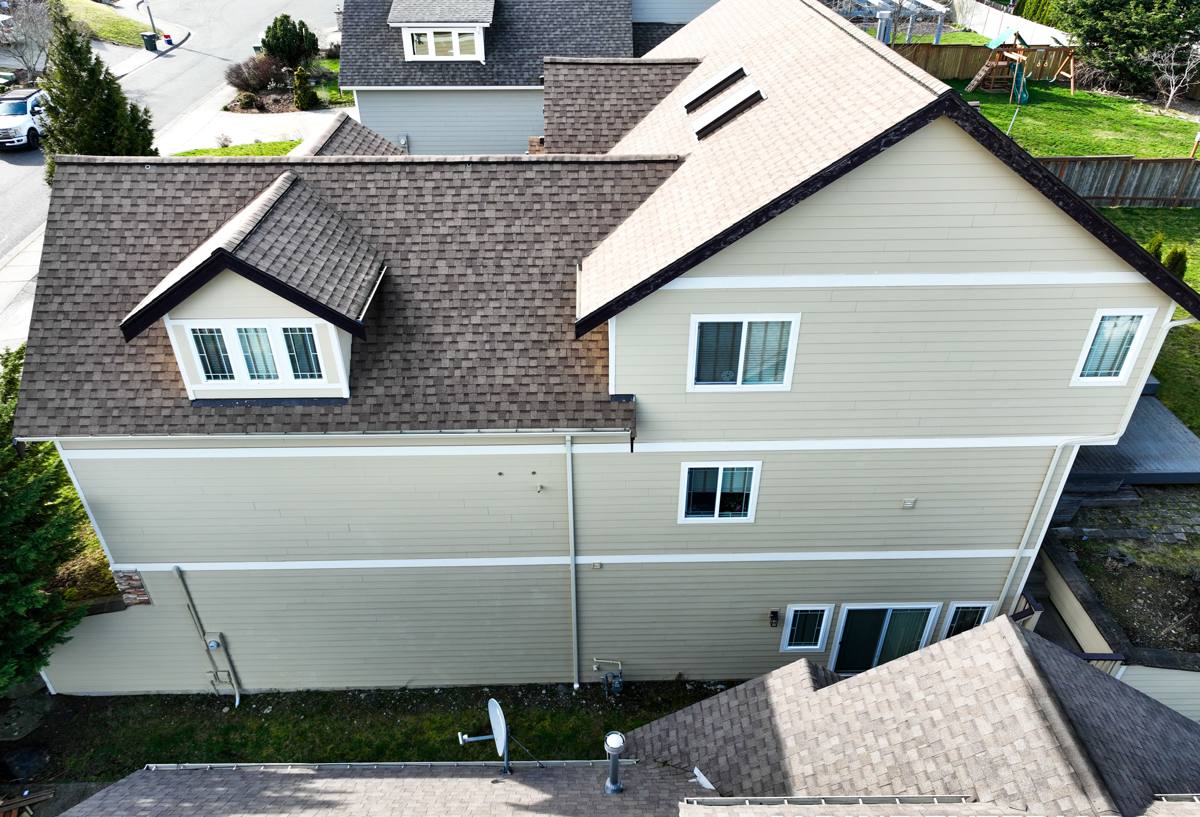
What the Ship Harbor Climate Actually Does to a Deck
Three things drive almost every deck problem we see in this area:
- Salt air corrosion. Airborne salt accelerates rust on fasteners, brackets, and hardware. Standard hot-dip galvanized fasteners can start showing surface corrosion faster near the water than they would inland — and once a fastener starts to go, it weakens the connection long before it looks obviously bad.
- Driving rain. Rain here doesn't just fall straight down — wind pushes it sideways, into ledger connections, under railing posts, and behind fascia boards. Flashing details that would be optional in a calmer climate are not optional here.
- Extended moss and algae season. Shaded decks, north-facing decks, and decks under mature trees stay damp for months at a stretch. Moss and algae don't just look bad — they hold moisture against the deck surface and make boards genuinely slippery, which is a real safety issue on stairs and landings.
None of this means a deck can't be built well here. It means the build has to account for these conditions from the framing up, not just at the surface.
Where We See the Most Damage
The recurring failure points on older Ship Harbor-area decks are consistent: ledger board attachment to the house (especially when flashing was skipped or done poorly), fastener corrosion at joist hangers and post bases, wood rot at the point where a support post meets its footing, and slick, moss-covered surfaces on stairs and shaded sections. Almost all of it traces back to moisture management, not the decking material itself.
Getting the Structure Right First
The decking surface is what people notice. The structure underneath is what determines whether the deck is safe and how long it lasts. For this climate, we pay particular attention to:
Ledger Board Flashing
The ledger board — where the deck attaches to the house — is the single most important flashing detail on the whole project. Water that gets behind an improperly flashed ledger doesn't just damage the deck; it can work its way into the house framing. We flash this connection to shed water away from the house, not just seal it, since sealant alone tends to fail over time in a climate that never really dries out.
Fasteners and Hardware
Given the salt air, we lean toward stainless steel or heavy-duty coated fasteners and connectors rated for coastal exposure, particularly at joist hangers, post bases, and any hardware that's hard to inspect or replace later. It costs more up front than standard galvanized hardware. It costs a lot less than reopening a deck in ten years to replace corroded connectors.
Footings and Post Bases
Skagit County soil conditions vary by lot, and footing depth has to meet local frost and load requirements regardless of material choice. Just as important in this climate is keeping the base of each support post out of standing water and off direct wood-to-concrete contact — a proper post base bracket keeps the post elevated and ventilated instead of sitting in a wet pocket against the footing.
Ventilation Underneath
A deck built low to the ground or over poorly draining soil traps moisture underneath, which slows drying and speeds up rot in framing members. Where grading and height allow, we build in airflow underneath the structure rather than closing it in.
Choosing a Decking Surface for This Climate
There's no single "correct" decking material — there are trade-offs, and the right choice depends on your budget, how much upkeep you want to do, and how exposed the deck is to shade and moisture.
| Material | How It Handles Salt Air & Rain | Moss/Algae Behavior | Maintenance |
|---|---|---|---|
| Pressure-treated wood | Good if properly sealed and re-sealed; fasteners must be corrosion-rated | Prone to moss in shaded spots without regular cleaning | Annual cleaning, re-staining every 2-3 years |
| Cedar | Naturally moisture-resistant, holds up well if finished and maintained | Can still grow moss in damp, shaded areas | Regular cleaning and refinishing to prevent graying/rot |
| Composite decking | Doesn't rot or corrode; hardware still needs to be corrosion-rated | Can still support surface algae/moss film; needs periodic washing | Low — occasional washing, no staining or sealing |
| PVC decking | Fully resistant to moisture damage and salt exposure | Smooth surface sheds moss growth more easily than wood grain | Lowest — washing only |
We're honest with clients about this: no decking surface is "moss-proof" in a Ship Harbor microclimate. Shade, airflow, and slope for drainage affect moss growth as much as the material does. A well-drained, sun-exposed composite deck will stay cleaner than a shaded wood deck tucked under trees — but a shaded composite deck will still need periodic washing.
Railings, Stairs, and Code Requirements
Any deck built to a meaningful height above grade needs railings and guards that meet current building code for height, baluster spacing, and load resistance. Stairs need consistent rise and run and a graspable handrail where required. These aren't optional design touches — they're inspected, and they're also where corrosion-prone hardware causes the most safety concern over time, since a railing post connection failing is a fall risk, not just a cosmetic issue. We build these connections with the same corrosion-resistant hardware standard we use throughout the structure, and we account for slip resistance on stair treads given the extended damp season this area sees.
Permitting for Anacortes and Skagit County
Most new decks and significant deck rebuilds in this area require a permit, with inspections tied to framing and final construction. Permit requirements and setback rules can vary depending on your specific property and its proximity to shoreline or critical areas designations, which is common near Ship Harbor. We handle the permit process as part of the job so you're not the one tracking down requirements or scheduling inspections.
Our Process for a Ship Harbor Deck Project
- On-site assessment. We look at sun exposure, shade patterns, drainage, existing structure condition (for rebuilds), and how close the site is to salt spray exposure.
- Material and design conversation. We walk through the honest trade-offs between wood, composite, and PVC decking for your specific site and budget — not a one-size-fits-all recommendation.
- Permit handling. We prepare and submit what's needed for Anacortes/Skagit County permitting and schedule required inspections.
- Structural build. Footings, framing, ledger flashing, and corrosion-rated hardware installed to code, with moisture management built in from the ground up.
- Decking, railing, and stairs. Installed per manufacturer specifications where applicable, with attention to drainage slope and slip resistance.
- Final walkthrough. We go over maintenance expectations specific to your material choice and site conditions, so you know what upkeep actually looks like.
What to Ask Before Hiring a Deck Contractor in This Area
A deck that looks fine on installation day can still be built wrong underneath. Before hiring anyone for a deck near the water, it's worth asking directly:
- What fastener and hardware grade do you use, and is it rated for coastal/salt-air exposure?
- How is the ledger board flashed where it meets the house?
- Will the project be permitted and inspected through Anacortes/Skagit County?
- What's the plan for drainage and airflow underneath the deck?
- What maintenance will this specific material actually require in a shaded, damp yard?
A contractor who's built decks throughout the Anacortes area — and specifically understands what Ship Harbor's exposure does to hardware and finishes over time — should be able to answer all of these without hesitation. It's not a hard question set. It's just one a lot of out-of-area or low-bid contractors haven't thought through, because they're not the ones getting the callback when a fastener corrodes in year six.
Maintenance That Actually Matters Here
Whatever material you choose, a few habits go a long way in this climate: rinse or sweep debris off the deck regularly so damp organic matter doesn't sit and feed moss growth, keep gutters and downspouts clear so runoff isn't dumping extra water onto or under the deck, inspect railing and stair connections annually for any looseness or visible corrosion, and reseal wood surfaces on the schedule the finish manufacturer recommends rather than waiting until it looks obviously worn. Catching a small issue — a loosening post base, an early sign of rust bleeding from a fastener — is far cheaper than repairing what it turns into after another wet Skagit County winter.
If you're planning a new deck or need to replace one that's showing its age near Ship Harbor, we're glad to take a look and talk through what makes sense for your site. Request a free, no-pressure estimate using the form below.