 Anacortes Roofing
 Why Mount Vernon Siding Wears Differently Than You'd Expect
Mount Vernon sits inland from Anacortes along the Skagit River valley, which shelters it from the harshest coastal wind but not from the moisture. Marine air still pushes up the valley off Padilla Bay and the Salish Sea, and combined with the river's own humidity, siding here spends a lot of the year damp rather than truly wet-then-dry. That slow, steady dampness is often harder on siding than a single hard storm, because it never gives paint, caulk, or wood fiber a real chance to fully dry out between rain events.
Add in the tree cover common around Mount Vernon neighborhoods and you get a long moss and algae season — moss doesn't just look bad, it holds water against the siding surface and works into seams, fastener heads, and butt joints. Over years, that's what turns a cosmetic issue into a repair call. We've built our repair process around this specific pattern: damp climate, filtered light, moss growth, and driving rain that finds its way behind poorly lapped or caulked siding.
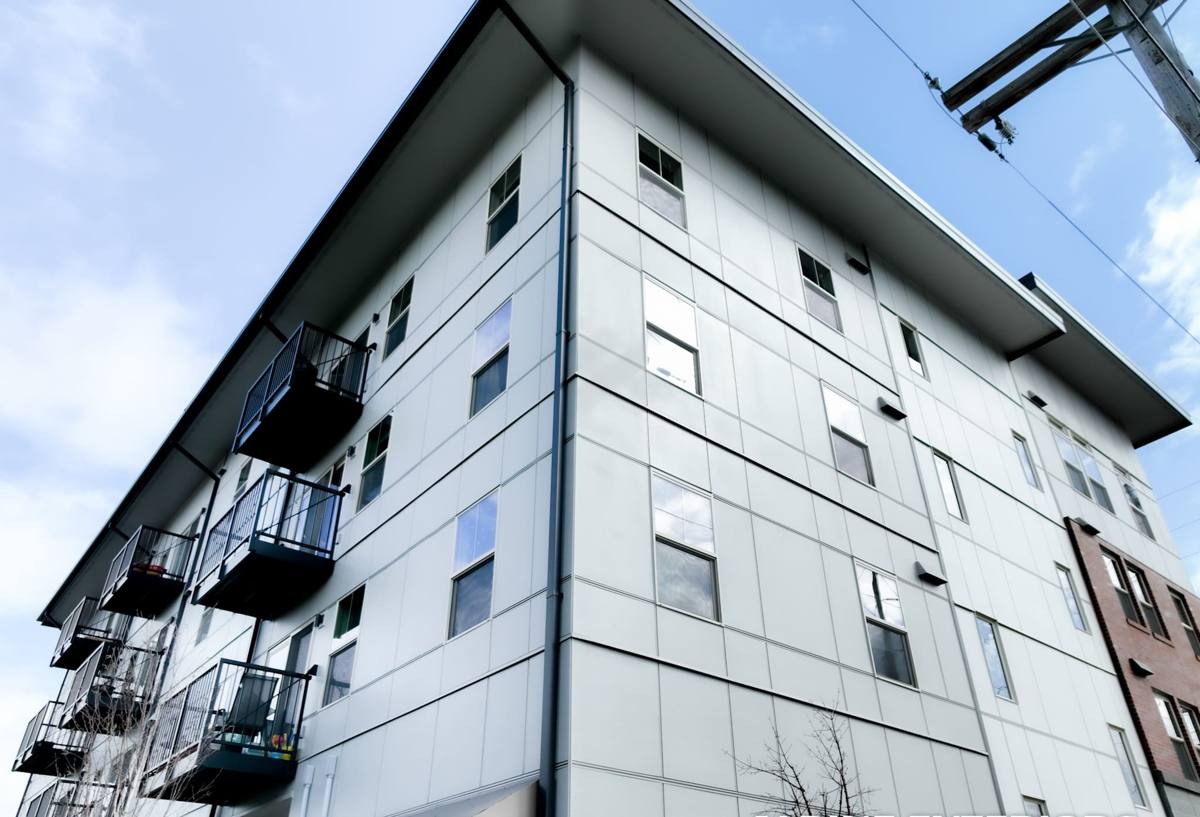
The Warning Signs Worth Calling About
On Wood, Engineered Wood, and Composite Siding
Soft or spongy spots when you press on the siding, especially near the bottom courses and around window and door trim, usually mean moisture has already gotten past the surface. Paint that's bubbling, peeling in sheets, or chalking heavily is a sign the substrate underneath is no longer shedding water the way it should. Dark streaking below butt joints or nail heads is often a sign water is tracking behind the panel rather than running off the face.
On Vinyl Siding
Warping, buckling, or panels that have visibly bowed away from the wall are common after Mount Vernon's temperature swings between cold snaps and mild wet stretches. Cracked or brittle panels — particularly on south and west exposures — are typical once vinyl has been through enough freeze-thaw cycles.
On Fiber Cement
Fiber cement is far more stable, but it isn't immune to installation problems: caulk failure at joints, missing or failed flashing above windows and trim, and moss buildup that traps moisture against the plank edge are the issues we see most. These are almost always installation or maintenance issues, not the material itself failing.
What a Correct Siding Repair Actually Involves
A repair that's done right starts with finding the actual water path, not just patching the visible damage. That means pulling back siding around a problem area to check the house wrap or building paper, the flashing details at windows, doors, and penetrations, and the condition of the sheathing underneath. Painting over a stain or caulking over a gap without checking what's behind it just seals moisture in.
- Identify the moisture source — often a failed caulk joint, missing kick-out flashing, or a moss-clogged seam rather than the siding itself.
- Remove and inspect affected panels and the water-resistive barrier behind them.
- Replace any compromised sheathing or framing before new siding goes back on.
- Re-flash trim, window, and door details to shed water the way they should have from the start.
- Install matching or compatible siding material, sealed and finished to spec.
Skipping any of these steps is how a homeowner ends up paying for the same repair twice within a few years.
Repair vs. Full Re-Side: How to Think About the Decision
Not every damaged section means the whole house needs new siding, but there's a point where patch repairs stop making financial sense. The table below is a general guide, not a quote — every house is different.
| Factor | Points Toward Repair | Points Toward Full Re-Side |
|---|---|---|
| Extent of damage | Isolated to one or two elevations or areas | Spread across multiple sides of the house |
| Age of existing siding | Under 10-15 years, otherwise sound | Original siding is decades old or already at end of life |
| Underlying material | Fiber cement with a caulk or flashing failure | Wood or composite with widespread rot |
| Cost pattern | Generally a modest, targeted expense | A larger investment, but one that resets your maintenance clock |
| Color/material match | Available in matching profile and finish | Discontinued profile, color, or product line |
If we get on a roof or up close to a wall and find that the damage we can see is a symptom of a bigger moisture problem, we'll tell you plainly rather than sell you a patch that won't hold.
Why We Only Repair and Re-Side With James Hardie Fiber Cement
When a repair calls for replacement material — whether it's a few boards or a full elevation — we install James Hardie fiber cement, and only James Hardie. We don't install vinyl, LP SmartSide, primed spruce, cedar, or other fiber cement brands like Cemplank or Allura. That's a deliberate standard, not a sales preference.
Vinyl moves with temperature and can warp or crack in the freeze-thaw swings Skagit County sees; wood and engineered wood products need consistent paint maintenance to keep moisture out, and in a climate that stays damp as long as this one does, that maintenance window is unforgiving. James Hardie's fiber cement is non-combustible, dimensionally stable in wet climates, and comes with a factory-applied ColorPlus finish that resists the fading and chalking we see on painted siding around Mount Vernon within just a handful of years. Hardie also engineers specific product lines — HZ5 and HZ10 — for different climate exposures, which matters in a region that swings between marine moisture and colder inland stretches.
None of this means other products are junk. It means that for the climate our customers live in, we've concluded fiber cement done right holds up longer with less maintenance, and we'd rather stand behind one system we trust completely than offer several we'd have reservations about.
Our Process for Mount Vernon Repair Calls
Every repair starts with an on-site inspection, not a phone estimate — moisture damage almost never looks as bad (or as simple) from a photo as it does in person. We check the full elevation the damage is on, not just the spot you called about, since moss and water tracking often affect a wider area than what's visible from the ground.
From there we give you a straightforward explanation of what we found, what caused it, and what it will take to fix — including whether we think a repair will actually hold or whether you're better served putting that money toward a longer-term fix. We handle removal, any needed sheathing or flashing correction, and the final siding and paint or finish work as one job, so you're not coordinating multiple contractors for a single leak.
Maintenance That Buys You Time Between Repairs
Skagit County's moss season is long, and a little seasonal attention goes a long way toward avoiding another repair call.
- Clear moss and organic debris off siding and trim at least once a year, especially on shaded north-facing walls.
- Keep sprinkler heads and downspouts from spraying directly onto siding.
- Check caulk joints at trim, windows, and butt joints annually and re-caulk before winter if it's cracked or pulling away.
- Walk the exterior after major windstorms to check for lifted panels, loose trim, or new gaps.
- Watch for chalky residue or peeling paint, which signal the finish is no longer shedding water.
- Trim back vegetation that keeps a wall shaded and damp longer than the rest of the house.
Why It Matters to Hire a Crew That Already Works Mount Vernon
A lot of siding damage in this area follows the same handful of patterns — moss trapping moisture at north walls, caulk failing at south and west trim exposed to driving rain, and flashing details that were fine for a drier climate but not for one this consistently damp. A crew that repairs siding across Mount Vernon and the greater Anacortes area sees those patterns often enough to recognize them fast, instead of treating every job as a first-time diagnosis. That familiarity also means we know what correct flashing and lap details look like for houses built in this area's typical construction eras, which shortens the time between "something's wrong" and "it's fixed properly."
If you're seeing soft spots, peeling paint, warped panels, or moss buildup on your siding, we're happy to take a look and give you a straight answer about what's going on and what it'll take to fix — no pressure, no obligation. Use the form below to request a free estimate.