 Anacortes Roofing
 Decks in the Skyline Area Take a Different Kind of Beating
Homes in and around the Skyline neighborhood tend to sit on elevated or view-oriented lots, which is great for the scenery and rough on an exposed deck. Wind off the water carries salt-laden moisture that settles into wood grain, metal fasteners, and any gap in a finish. Combine that with Anacortes' pattern of driving rain through the fall and winter, and a long stretch of shaded, damp months that favor moss and algae growth, and you have three separate stressors working on the same structure at the same time. None of them are dramatic on their own. Together, over several years, they're what turns a sound deck into one with soft boards, rusted hardware, and a ledger connection nobody has looked at closely.
We work on decks throughout Skagit County, but a deck built or repaired for a coastal-exposed, elevated lot needs different attention than one tucked into a sheltered inland yard. That's the difference between a repair that holds and one that reopens the same problem in two winters.
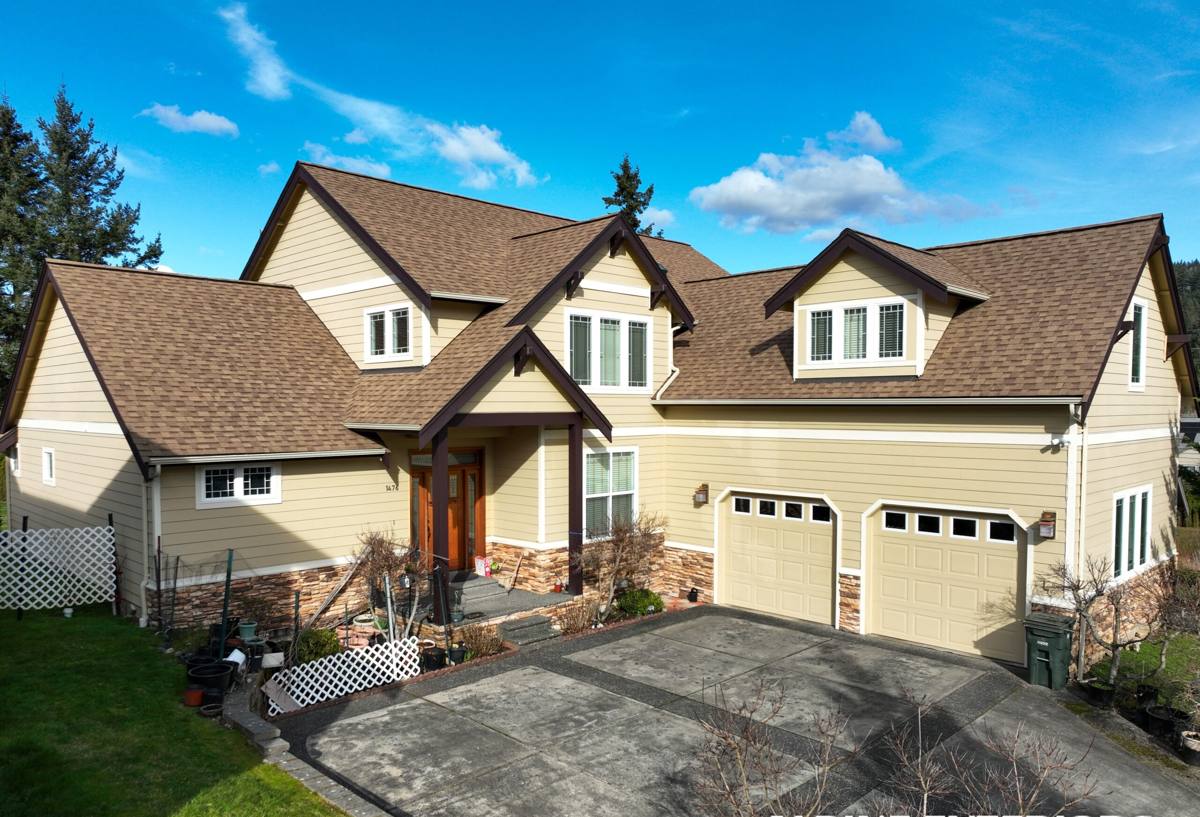
How Salt Air, Rain, and Moss Actually Damage a Deck
Salt Air and Corrosion
Airborne salt accelerates corrosion on anything metal — nails, screws, joist hangers, post bases, and railing hardware. Once a fastener starts to rust, it loses grip strength long before it looks obviously bad from the surface. A board can appear fine while the screw holding it down has lost most of its holding power underneath.
Driving Rain and Water Intrusion
Rain that comes in sideways, which is common here, doesn't just sit on the deck surface — it gets pushed into seams, under flashing, and behind ledger boards where standard vertical-rain assumptions don't apply. Water that gets behind a ledger or under a rim joist can sit there for weeks without ever showing a stain you'd notice from the yard.
Moss, Algae, and the Long Damp Season
Anacortes gets a genuinely long moss season, and shaded or north-facing decks are the worst affected. Moss and algae hold moisture against the wood surface far longer than open air would, which softens fibers, breaks down finishes, and makes boards slicker and more dangerous underfoot. Left alone, it's not just cosmetic — it's actively feeding rot.
Signs Your Deck Needs Repair — Not a Full Rebuild
Most decks we look at don't need to be torn out and replaced. They need targeted repair to the parts that are actually failing, while the sound structure stays in place. Here's what we check for on a typical Skyline-area visit:
- Soft, spongy, or visibly cupped decking boards, especially in shaded or low-airflow spots
- Rust streaks running down from screw heads or joist hangers
- Any give, bounce, or movement when you walk near the ledger board (where the deck attaches to the house)
- Gaps, cracks, or peeling caulk where the ledger meets the siding
- Loose, wobbly, or splitting railing posts
- Persistent green or black growth that comes back within weeks of cleaning
- Stair stringers that flex or feel different from side to side
- Discoloration or staining on the underside of the deck, visible from below
If you're seeing even one or two of these, it's worth having someone look underneath the deck, not just walk the surface. Surface problems are often the last thing to show up, not the first.
What a Correct Repair Actually Involves
Start Underneath, Not on Top
A repair that only replaces the boards you can see from the yard is treating a symptom. We start by getting underneath the structure to check the framing, the ledger board connection, the flashing above it, and the condition of the joists and beams. That's where moisture damage usually originates, and it's the part a homeowner can't easily inspect themselves.
The Ledger Board Connection
The ledger board — the piece that ties the deck to the house — is the single most important structural connection on most decks, and it's also the one most exposed to hidden water intrusion. Proper flashing above the ledger, correct fastener spacing, and a gap or drainage path so water can't pool against the house are non-negotiable parts of a correct repair. If this connection has been compromised by long-term moisture, that gets fixed before anything cosmetic happens.
Fasteners and Hardware
Given the salt exposure common to Skyline's elevated and view lots, we use corrosion-resistant fasteners and connectors rated for coastal or treated-lumber exposure, not standard hardware store fare. It costs a bit more up front and saves you from replacing the same boards again in five years because the screws gave out underneath them.
Drainage and Airflow
A lot of long-term deck damage traces back to water that had nowhere to go. Part of a proper repair is making sure boards have consistent gapping for drainage and that the space underneath the deck has enough airflow to actually dry out between rain events, rather than staying damp for days.
Repair Material Considerations
When we're repairing sections of an existing deck, matching or reasonably pairing materials matters — both for appearance and so the new work doesn't fail at a different rate than what's around it.
| Material | Repair Considerations | Salt Air / Moisture Behavior |
|---|---|---|
| Pressure-treated lumber | Widely available, straightforward to match to existing framing and decking; needs re-sealing on a regular schedule | Handles moisture reasonably well if finish is maintained; fasteners are the weak point without corrosion-resistant hardware |
| Cedar or other natural wood | Better appearance match for higher-end existing decks; more sensitive to finish gaps and UV breakdown | Naturally moisture-resistant but still needs a maintained finish in coastal, wet climates |
| Composite decking | Good for board replacement where moss and moisture have been recurring problems; won't perfectly color-match older boards | Resists rot and moisture absorption well; still needs proper drainage and cleaning to prevent surface algae film |
| Framing and structural lumber | Should always be repaired with treated, structural-grade material regardless of what the visible decking is | This is the part most affected by hidden water intrusion — never a place to cut corners |
We'll walk you through which option makes sense for your specific repair — there's rarely one right answer, but there is usually a best fit for your deck's exposure, age, and budget.
Repair or Replace? What Actually Drives That Decision
Not every deck problem calls for a full rebuild, and not every deck is worth patching indefinitely. The honest answer depends on a few specific factors, not a blanket rule.
| Factor | Leans Toward Repair | Leans Toward Replacement |
|---|---|---|
| Framing condition | Joists and beams are solid; damage is isolated to boards or hardware | Widespread soft or rotted framing, especially near the ledger |
| Age of structure | Deck is within its expected service life for its material | Deck is well past typical service life and showing multiple failure points |
| Extent of damage | Damage is limited to a section or a specific system (railing, stairs, a few boards) | Damage is spread across the deck surface and substructure |
| Code and safety | Structure meets current attachment and railing standards | Older decks built before current ledger and railing code requirements |
We'll give you a straight answer either way. If repair genuinely makes sense for your deck, we'll say so — a full rebuild isn't automatically the right recommendation just because it's a bigger job.
Our Deck Repair Process
- On-site assessment — we inspect the deck from above and below, checking framing, the ledger connection, hardware condition, and drainage, not just the visible decking surface.
- Honest scope and estimate — you get a clear picture of what's actually failing, what's still sound, and what your repair options are, with pricing that reflects the real scope, not a guess.
- Structural repairs first — any framing, ledger, or flashing issues get corrected before cosmetic work starts, since building on top of a compromised structure just hides the problem.
- Decking, railing, and hardware repair — damaged boards, posts, and fasteners are replaced with corrosion-resistant materials suited to this area's exposure.
- Final check and maintenance guidance — we walk the finished repair with you and explain what upkeep will actually extend its life in this climate, not generic advice that doesn't apply here.
Living With Moss and Maintaining a Deck Between Repairs
Anacortes' moss season is long enough that a deck repair without a maintenance conversation is only half the job. Shaded decks, north-facing decks, and anything under overhanging trees will keep growing moss and algae no matter how good the repair is — the goal is managing it before it does damage again, not eliminating it entirely.
A few habits go a long way: sweep debris off the deck regularly so it doesn't hold moisture against the boards, clean moss and algae growth before it establishes a heavy layer, and check the ledger and railing connections once a year for early signs of rust or movement. None of this requires special equipment, and it's far cheaper than another repair down the road.
Why a Crew That Already Works Skyline Matters
A deck repair done by someone unfamiliar with this area's exposure often looks fine on completion day and starts failing within a couple of seasons — because it was built or repaired assuming a drier, less corrosive climate. A crew that regularly works homes in and around Skyline already knows to spec corrosion-resistant hardware as standard, to pay close attention to ledger flashing on wind-exposed lots, and to expect moss issues on shaded sections rather than being surprised by them later.
That familiarity also means fewer surprises during the job itself — knowing what typical framing and construction looks like in this neighborhood's homes, and what permitting or inspection expectations apply in Skagit County, keeps the project moving instead of stalling on avoidable delays.
Get a Straight Assessment of Your Deck
If your deck is showing soft spots, rust, loose railings, or moss that keeps coming back, it's worth having someone take an honest look before it turns into a bigger repair. We offer free, no-pressure estimates for Skyline-area deck repair — just fill out the form below and we'll take it from there.