 Anacortes Roofing
 Why West Anacortes Homes Need Windows Built for This Climate
West Anacortes sits close to the saltwater surrounding Fidalgo Island, which means homes here take on a different kind of weather than houses ten or fifteen miles inland in Skagit County. The air carries salt. The rain comes in sideways more often than it falls straight down. And the tree cover that makes this part of town shady and pleasant in July also means north- and west-facing walls stay damp for weeks at a stretch during the wet months. Windows are one of the first parts of a house to show the wear from that combination, because they sit right at the boundary between conditioned indoor air and everything the marine climate throws at the exterior.
A window that would hold up fine in a drier part of the state can start failing early here — hardware corrodes, seals give out, wood trim goes soft, and frames that aren't detailed correctly for wind-driven rain start letting water in around the edges instead of on the glass. This page is about what a correct custom window job looks like specifically for a West Anacortes home, not a generic overview of window shopping.
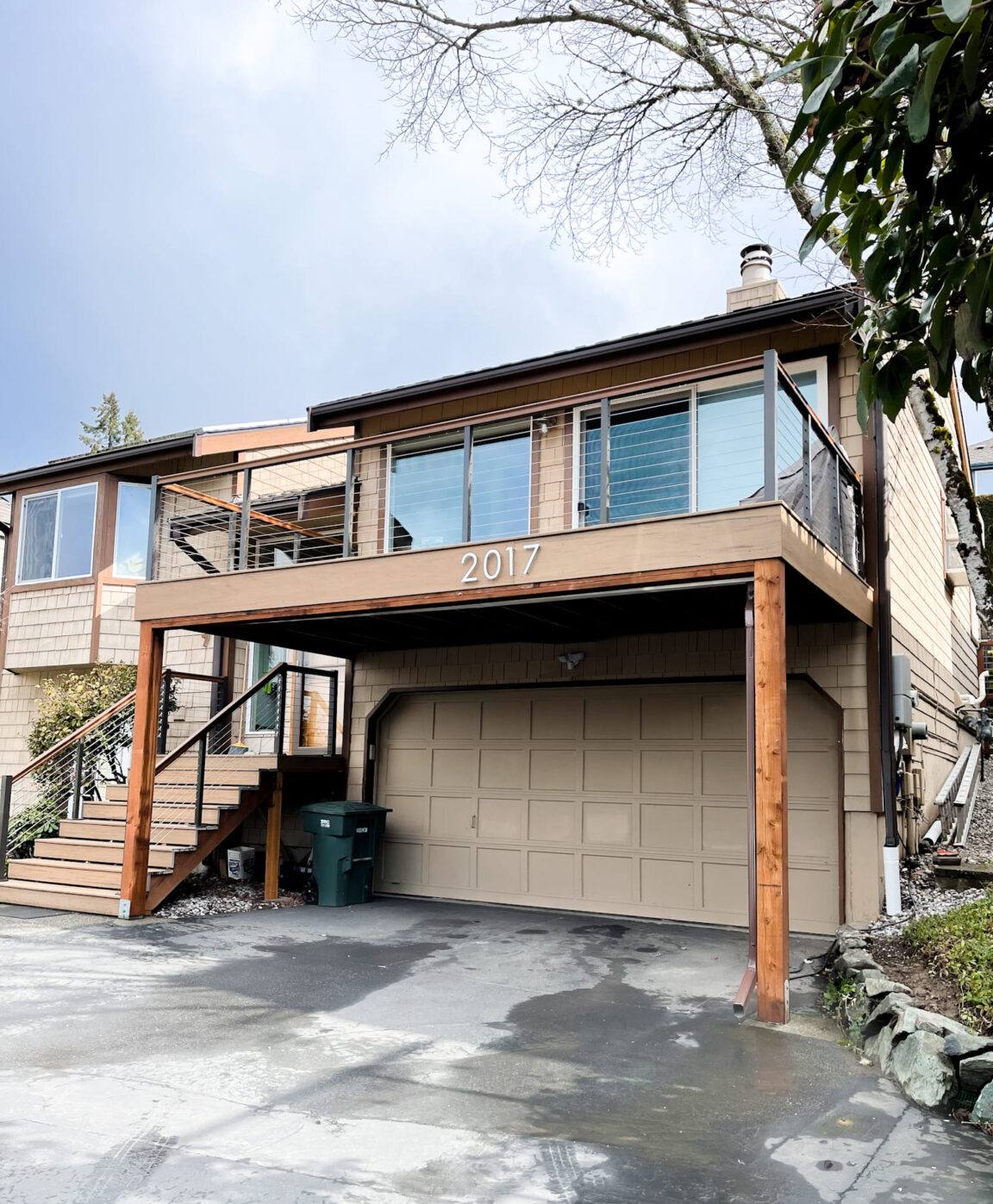
What Salt Air, Wind-Driven Rain, and Moss Actually Do to Windows Over Time
Salt Air and Hardware
Salt in the air accelerates corrosion on anything metal — hinges, cranks, locks, and the fasteners holding trim and flashing in place. On a standard window, that shows up first as stiff or sticky hardware, then as staining running down from screws and corner joints, and eventually as hardware that simply stops working. This is why hardware finish and metal quality matter more here than they would on a house twenty miles inland.
Wind-Driven Rain
Anacortes gets plenty of rain that isn't falling straight down — it's being pushed sideways by wind off the water. Ordinary weatherstripping and a basic bead of caulk can handle vertical rain just fine, but wind-driven rain finds every gap, seam, and undersized flashing detail. Most of the leaks we get called out to inspect aren't glass failures at all — they're water finding its way in around the frame because the flashing or sill pan wasn't detailed for this kind of weather in the first place.
Moss and Prolonged Moisture
Shaded exterior walls and roof runoff both contribute to a long moss and algae season on this side of town. Moss holds moisture against wood trim, sills, and siding far longer than open sun exposure would allow to dry out. On older wood-frame windows, that constant dampness is what leads to soft, rotting sills and trim long before the sash or glass itself is actually a problem.
Choosing the Right Window Material for a Marine Climate
Material choice matters more here than in a drier climate, because every material handles salt exposure, moisture, and freeze-thaw cycling differently. There's no single "best" window — the right call depends on your home's exposure, your budget, and how much upkeep you're willing to do.
| Material | Performance in Salt Air / Coastal Weather | Maintenance | General Cost Tier |
|---|---|---|---|
| Vinyl | Doesn't corrode; performs well in salt air; can flex slightly in large sizes | Low — occasional cleaning, no painting | Lower to mid |
| Fiberglass | Excellent — dimensionally stable, resists corrosion and won't rot | Low | Mid to higher |
| Wood (with quality exterior cladding) | Good if the cladding and flashing details are done right; the wood core is protected from direct weather exposure | Moderate — cladding needs periodic inspection at joints | Higher |
| Solid wood, unclad | Requires diligent upkeep in this climate; prone to moisture issues if maintenance lapses | High — regular painting/sealing | Mid to higher |
| Aluminum (uncoated or poorly finished) | Prone to pitting and corrosion in salt air unless properly finished | Moderate to high | Varies |
For most West Anacortes homes, we steer customers toward vinyl or fiberglass for the bulk of a project, and reserve wood-clad units for spots where the look really calls for it — usually front-facing windows where the added cost is worth the appearance. We're honest about the trade-off: unclad wood windows can look beautiful, but they demand a maintenance commitment that a lot of busy homeowners underestimate, especially in a climate this wet.
Full-Frame Replacement vs. Insert Replacement: Which Is Right for Your Home
There are two basic approaches to replacing a window, and which one applies depends on the condition of what's already there.
Insert (Pocket) Replacement
The new window goes into the existing frame, which stays in place along with the existing exterior trim and flashing. This is faster and less invasive, and it's a reasonable option when the existing frame, sill, and flashing are still sound. It is not the right call when there's already moisture damage hiding behind the old frame — putting a new window into a compromised frame just seals the problem inside the wall.
Full-Frame Replacement
The old window, frame, and often the interior and exterior trim all come out, exposing the rough opening down to the framing. This lets us inspect the sheathing and framing for hidden rot or water damage, correct the flashing and sill pan properly, and start fresh. It costs more and takes longer, but on a lot of West Anacortes homes — especially anything with visible staining, soft trim, or an older window that was never properly flashed — it's the only way to actually fix the underlying problem instead of covering it up.
We don't default to the cheaper option just because it's cheaper. Part of a proper estimate is opening things up enough to tell you honestly which approach your home actually needs.
Flashing, Water Management, and the Details That Actually Prevent Leaks
This is the part of a window job that homeowners rarely see once it's finished, and it's also the part that determines whether the window leaks in five years. A correct installation in this climate includes:
- A sloped sill pan that directs any water that gets past the window back outward, not into the wall cavity
- Self-adhering flashing membrane integrated with the house's weather-resistive barrier in the correct shingle-lap order, so water sheds down and out at every layer
- Head flashing sized and positioned to break the path of wind-driven rain above the window, not just decorative trim
- Backer rod and quality exterior sealant at the trim joints — sized correctly, not just a bead of caulk smeared over a gap
- Weep holes or drainage paths left clear, not accidentally sealed shut during installation
Skipping or rushing any one of these is how a window that looks fine on installation day ends up with rot in the wall three winters later. This is also exactly the kind of detail that separates a rushed installer from a crew that's dealt with the consequences of doing it wrong on other Anacortes homes.
Energy Performance: U-Factor and Solar Heat Gain in the Pacific Northwest
Skagit County's climate is mild but consistently damp and overcast for long stretches, which changes what matters for window performance compared to a hot, sunny climate. Two numbers on the National Fenestration Rating Council label are worth understanding:
- U-Factor — measures how well the window resists heat loss. Lower is better. This is the number that matters most here, since our climate is about keeping heat in more than keeping it out.
- Solar Heat Gain Coefficient (SHGC) — measures how much solar heat passes through the glass. In a cloudy climate like ours, a moderate SHGC is usually fine; you don't need the aggressive solar blocking that a desert climate calls for.
Double-pane windows with a low-E coating and argon gas fill are the standard for most West Anacortes replacements and offer a solid balance of performance and cost. Triple-pane adds meaningful extra insulation value and sound dampening — worth considering on a north-facing wall that catches the wind, or for a homeowner prioritizing comfort near a fireplace or living area — but it comes at a real cost premium that isn't necessary for every window in the house.
Our Custom Windows Process in West Anacortes
- On-site assessment. We look at every window being discussed, not just the ones you've flagged, and check trim, sills, and siding around each opening for early signs of moisture damage.
- Honest scope recommendation. We tell you plainly whether each opening is a candidate for insert replacement or needs a full-frame approach, and why.
- Custom measurement and ordering. Every opening on an older home is slightly different — we measure each one individually rather than assuming uniform sizing, and order windows built to those exact dimensions.
- Removal and inspection. When the old window comes out, we inspect the framing and sheathing before anything new goes in. If we find hidden rot, we tell you before proceeding, not after.
- Correct flashing and installation. Sill pan, flashing membrane, window, insulation, and sealant — installed in the right order, every time, regardless of whether it's a one-window repair or a whole-house project.
- Interior and exterior finish work. Trim, caulking, and paint or stain matched to the rest of the house.
- Final walkthrough and cleanup. We test every window's operation and hardware before we consider the job done, and we clean up the site.
Signs Your West Anacortes Home's Windows Need Attention
Not every window problem is obvious from inside the house. A few things worth checking, especially heading into the wet season:
- Stiff, sticky, or corroded hardware — cranks, locks, or hinges that didn't used to fight you
- Visible staining or streaking below a window on the exterior siding
- Soft or spongy trim or sill wood when you press on it
- Moss or algae buildup around the frame or sill that keeps coming back
- Fogging or moisture between panes on a double- or triple-pane window (a sign the seal has failed)
- Noticeable draft or cold spot near a closed window on a windy day
- Difficulty opening, closing, or latching a window that used to operate smoothly
- Peeling or bubbling interior paint near a window frame
Any one of these on its own isn't necessarily an emergency, but a few of them together — especially staining plus soft wood — usually means water has already gotten past the surface, and it's worth having someone look before it gets worse.
Why a Crew That Already Works West Anacortes Matters
Window installation isn't identical everywhere. A crew that mostly works drier, inland parts of the state will size flashing and sealant details for a lighter, more predictable rain pattern — and that's not necessarily a good match for a house dealing with driving rain off the water and a long moss season every year. Working regularly in West Anacortes and the rest of Skagit County means we're used to the housing stock in this area, the exposure patterns different sides of a house deal with, and the failure points that show up here specifically rather than in a generic manual.
It also matters after the job is done. Windows are a long-term investment, and if a seal needs attention or a piece of trim needs a look in a few years, it's a real advantage to call a crew that's local, knows your house's history, and isn't a stranger driving in from out of the area for a single job.
If you're noticing any of the signs above, or you're just ready to stop fighting old windows through another wet Skagit County winter, we're happy to come take a look. We offer free, no-pressure estimates for West Anacortes homeowners — fill out the form below and we'll get in touch to schedule a time that works for you.